⌕
AM
Andy Mage
is the man I've never had walk-up music before that's great I know right it's like like our theme music I know it's just it's incredible it's incredible Yeah, man, let me just say, I'm so honored to be able to connect with you. I'm really grateful for Jeff and those who work behind the scenes to make this interview happen. And I think Jeff was just really tired of me talking about you and the book over and over, every single time. I'm telling you, every single podcast, every single, I'm like, well, it was church refugees and Josh Becker. So he's like, who is this guy? We gotta find him and talk to him. So it's really, really cool to be able to chat with you. about the work that you've done then and even what you're doing now.
JP
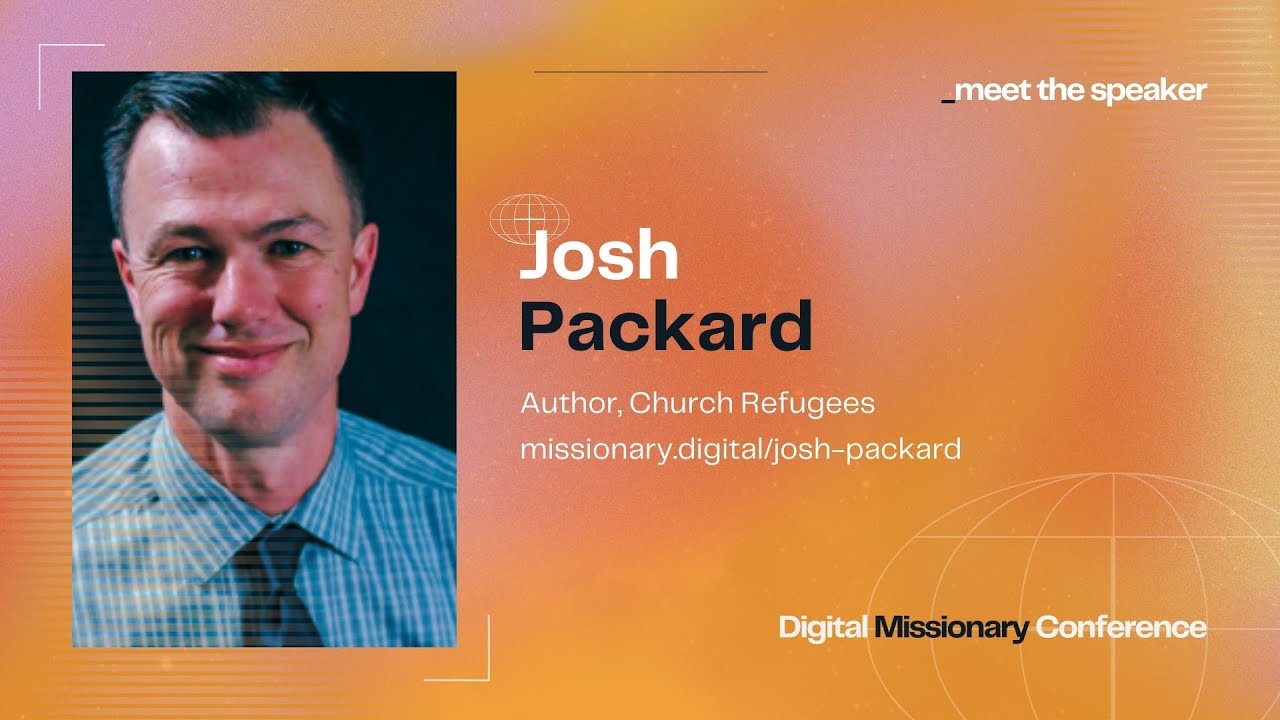
Josh Packard
Well, thanks. That explains so much. When I would see sales go from two copies a week to seven, it must have been because you were on a podcast. So that's really what helps me to decode the last few years.
AM
Andy Mage
Yeah, yeah, for sure. I've put the links on my Facebook page and all those kind of things. Yeah, it's been a blessing. Thank you for the work that you've been doing to help the church kind of see some of the things that typically we don't necessarily see. And then the backup with research so that we can take it seriously and move beyond just feeling like this is our feelings, but these are facts. This is research stuff, and we have to look at it. We have to look at it. So I'm looking forward to just you sharing some of your insights on how your study of those who left the church, really the traditional church model. One of the things that got my attention, like 65 million had left the church, 30 million left the faith period, and then 35 million just left the model. And we're just, you know, some of them were kind of poking around thinking, well, it's just this one church. Let me find another church. And then they came to the conclusion, no. It's the model. I can't do the model. And so they left. So those of us here in this conference trying to reach those people, among others as well, there are some who are trying to reach those who are unsaved. and things like that. Obviously, we just heard a little bit about that. But what are some unique insights now that as you look back at church refugees and this large population that's online, the de-churched, what are some, what I would call maybe some best practices that you would see on what they're looking for and how we can connect with them digitally?
JP
Josh Packard
Yeah, thanks. Great question. I mean, it's... When I think back to that research that was, you know, we started doing it almost a decade ago and I was like, you know, I wonder if this will have a shelf life or if this is just a flash in the pan. And what we've seen following the trends over the last 10 years is that this is, that was just the beginning or at the beginnings of something that was happening more regularly. And a couple of things really stand out that we wrote about in the book. I say we, it was me and a student of mine, Ashley Hope, is a co-author. Leaving organized religion or especially traditional forms of organized religion was what social scientists often refer to as a career, meaning that there are stages along the way. It's not very rarely is it like this like break moment where, you know, they show up, somebody says one thing that they don't like and so they leave forever. And it just doesn't happen like that. Like most of the people that we interviewed and then the people that we surveyed in the follow up work were explaining like this series of, like they were trying to hang on and trying to hang on and trying to hang on. They were actively trying not to leave. And they finally just got to this point where it was, for a variety of reasons, it was just untenable to them. And I think that is such an interesting, like that wasn't really anything that anybody had explained before. And so in this, you know, in the other sort of second thing that we offered that I think was new is the term duns. That these were, came right out of an interview. Somebody told me, they just said, you know, I tried and I tried, but like, I'm just done with the trying. Yeah. And I think that those things are really interesting in the context of this particular gathering, because what we couldn't have known then, I mean, maybe we could have, but I didn't, I wasn't smart enough to figure out then, is how much of this new digital world would open up an opportunity for those people who had said, I'm not done with God, I'm just done with the institutional church, to have this brand new thing that even they hadn't considered of like,
AM
Andy Mage
okay, maybe I could do that, right?
JP
Josh Packard
Right. Obviously, if I'd known at the time, I would have asked questions about that, but it was the online world in 2012, 13, 14, we're starting to do this work is so, communally anyway, is so nascent. I mean, it's just, there's barely anything there.
AM
Andy Mage
Right, right. And so that's kind of one of the things I've had a passion for is because when people left, there was no other options out there. I mean, home churches weren't really taking off at that time. And so they're just literally floating around.
JP
Josh Packard
And they're just notoriously like really unsustainable. I mean, so in fact. So this is a funny story, like behind the scenes, we did this work, wrote to the Louisville Institute, got a grant to do a follow-up project to say, okay, all these people in this study told us that they were leaving to go and do other things, that they weren't giving up on God. And so they're going to start neighborhood groups or home churches or whatever. You know, let's find out like, what do those really look like? And in the, in the, like the 10 months between when we got the money or, you know, when I wrote the grant, when we got the money. we started then reaching out to travel these places and they'd all disappeared and i'm not to it's not to say that home churches aren't sustainable i mean i think done in the right ways by the right people but as a model as like oh the world is gonna you know quarter congregations are gonna decline and instead they'll be you know all these people who are having dinners at home and child care over in the guest bedroom uh you know it's like i i just don't see that happening
AM
Andy Mage
Yeah, yeah, yeah. And you know, some of the people when they were, this is my guess, when they jumped into that, they didn't have any kind of support, training, encouragement. I mean, just really flailing, which is part of that. lack of success there and i think now that you have more of an intentional effort to equip and train those house church folks um now it's actually beginning to begin to take off but one of the things i was passionate about as far as digital ministry is to offer those people an answer like what do i do now well now there we can connect digitally so that's one of the things that began to happen with with hearts like his where hundreds of people started joining and people were like man this is this is really great um So it kind of filled that gap. And alongside of that, Jeff came in working with Exponential to help write this book called Sharing Jesus Online. And as we're diving into Sharing Jesus Online and what really works, one of the things that I quoted in that book, because when we try parts like his, it was an experiment. I had no idea. I mean, I really still had the in-person church model in my head, although I was trying digital. some of those blockages were coming up, trying to be successful. But when one person said, I've discovered online the sense of community I was looking for in person, that's when I knew we were onto something. And so when you think about some of the stuff that the church refugees are seeking, although they left one model, would you say they're still looking for like authentic community and sense of belonging?
JP
Josh Packard
Yeah, well, I don't think that's ever changed, right? And that's the sort of structure of the chapters of the book. You know, they wanted community but got judgment instead. They wanted activity but got bureaucracy. They wanted conversation and meaningful ministry. I think people have been looking for the same things basically throughout time, especially when it comes to their seeking in their religious and spiritual lives. The format that that is delivered to them has to match the cultural moment of the time for it to resonate with them. And we heard some of this earlier today. I've been talking about this for years. We are undergoing this massive trust shift in the United States. We used to be a country that trusted strongly in institutions. You can look at Pew, Gallup, some of my own research, anybody that you want. It all charts the same. It has been declining steadily for the last 40 years. And it's global too. That is not just in the United States. And what this means is that these institutional models that thrived in this high trust era, it's not that they had the wrong ideas in mind. They're great for their time. They're awesome. And it's not like they're completely ineffective now. We still do kind of trust them. But as the cultural moment shifts, we're naturally going to have to start seeing some other modalities rise up to meet that. And right now our trust is not in institutions. It's much more in relationships. Um, and so you're going to start seeing things that are much more relational, um, relation first, right? So you're going to start seeing what's, what is in person, where can I find community? You know, what's face to face. And I don't think that means physically face to face, but like, who do I know? Um, in fact, in the most recent research that we did, the, the data around, um, trust was off the charts. Like the people who trust organizations, institutions, government officials, et cetera, isn't like the bosses, you know, we're talking like 10, 11, 12%, but do I trust somebody I know we're talking 70, 80% or more.
AM
Andy Mage
yeah yeah so what in light of that what opportunities do you see for digital ministry to um to fill in that gap for for some of those people like i said they're not necessarily looking for in person but even if they just get to know someone um you know even digitally so how do you see a digital ministry filling that that gap for that population
JP
Josh Packard
Well, this is a really, I mean, I think this is the critical point is like, what gap are you filling and why? We just, I don't know how conversant the audience will be here with the Catholic world, but the Catholic church has been undergoing this thing called synodality for the last two, three years now, and it will stretch on. probably for the foreseeable future. But basically it's the shift in the entire Catholic church to become a more listening focused church. And we have a lot of connections there. I'm not Catholic, but they asked me among many, many, many, many, many other people to help contribute to, okay, what does it look like to be a synodal, a listening digital missionary? And why is this so important? So we had been doing some of that research last year. What we found just by interviewing people and charting through the trends of sort of like how this, why people are experiencing success there as digital missionaries and why the church should pay attention, is because rank-and-file congregants do not believe that their pastors and priests and positions of leadership are inclined to want to listen to them. Okay, the Pope may say that they have to, but they don't really believe that they want to, right? So they're not doing a whole lot of, like, reaching out or talking or being conversant with them. the digital missionaries on the other hand are having this amazing impact because they're stepping right into that gap and right at the point where people are saying well we're not so sure that the church by and large can be relational but like i actually have this person who has three million followers i feel like i have more relationship with that person and you know the other people in the comments because we're constantly chatting back and forth than i do with this church on the corner that only gets 300 people to come on a sunday morning
AM
Andy Mage
Right.
JP
Josh Packard
That's wild. Right. And I think that's because the posture and I would say the opportunity for digital missionaries generally the lesson to extract from this is that listening has become more critical than ever. We digital missionaries cannot probably will not experience much success if it's one way communication. So if you're just getting on your platform and talking out to people, my guess is that is a small percentage of whatever success you're experiencing. It's the way you facilitate that engagement among the people who are also on that platform with you or between you and the people who are followers. Followers is such a weird word to say, but you know what I mean. Right.
AM
Andy Mage
yeah absolutely yeah i i think you know um people rave about like in person in person in person but the problem is like we're saying people are wanting to be to be listened to and some of the structure with in person is they're actually going to listen instead of going to be listened to and in some of these chats and these where there's interaction back and forth people can share their feedback their insight and be listened to even if it's in just just a chat and for for a few moments and definitely um valuing that and it highlights some impact for for digital ministry But one of the things you're pressing, and for those of you who are listening, Josh says a sacred listening study that was part of the Future of Faith. And that's part of what he's referring to there is how can we digitally like listen to people and let people know that we're listening to them and that we see them. And those are some ways I think. we've got to explore all around the world. And like Josh was saying, like no matter where you're on the world, like this is a thing that people want to be listened to and they feel a sense of value and connection with doing that. What are your thoughts?
JP
Josh Packard
John, if I could just toss out one thing real quick. I don't see, I don't know if I have the ability to drop links in here, but the Pew just came out with a study man this is just like three days ago march 26th and the title says around the world many people are leaving their childhood religion so when you say this is global it really is global like this this trend that we're seeing in the united states maybe picked up on early because there's a lot of research that goes on here this is not just a thing that's happening um to you know to us so to speak who are based here this really is a global phenomenon of people leaving their childhood religions for a variety of other things leaving the church entirely switching occasionally switching um and other you know other phenomenon that are happening yeah yeah it's um
AM
Andy Mage
And I think some of what you referred to earlier about the lack of trust or the decreasing trust in institutions is part of that globally as well. Like you said, it's not just America. It's a global cultural kind of thing. And so those who are leading into the digital space are really finding a lot of opportunities to connect with folks. So I want to chime in here with a little... You did another book called Making Meaning. Right, and talking about Gen Z and their values and helping workplaces kind of adjust. And I think that there's some insight there, even for those who are trying to reach out online, especially to Gen Z. What do you think, how do you think some of those values from Gen Z overlap with ways that digital ministry needs to adapt in order to connect with Gen Z based on some of those values?
JP
Josh Packard
I loved it. This is such a fun book to get to write. So I was the founding executive director at Springtide Research Institute. And this is one of the first things that we came out with. And it was really just like sort of looking through all of our survey data, focused on young people and through the interviews to figure out, okay, what values do they care about most? And they want you to be accountable. They want you to be inclusive. They want you to be authentic. And so we wrote these up in the eight. So it's accountable, inclusive, authentic, welcoming, impactful, relational, growthful, and meaningful. And the growthful there one is that they want you to help them grow. So it's not important that you remember all eight of them. The point is that I think in this conversation that among their topmost values, none of them were like, we want you to be an authority. We want you to be the expert. We want you to be the biggest. Like, I think all these things that would have resonated with my dad or my grandfather, you know, where it's like we're attracted to the biggest and the best and the most. Yeah. I think Gen Z and we have no reason to think that this is only generational. In fact, I just have a book coming out this fall called Faithful Futures, arguing that we should really kind of stop thinking only in generational containers because there's too much diversity in the world. But this trend away from these big institutional things and toward these more relational things as values really shows up with them, too, where it's like, I don't want the smartest person. I want the person who knows me best. That's who I'm attracted to, right? I don't want the person who has the most letters after their name and is the biggest expert. to be leading me i want the person who asks the right questions um and i think that's just a it's a very it's a fundamental shift in in how ministry you know will probably be occurring over the course of the next 10 or 15 years and one that i think honestly given the more flexible organizational structures pay structures credentialing structures etc it's one that i think that online missionaries are much more equipped to be able to pivot and lean into, even though the digital can make relational stuff hard. I mean, we've already seen a thousand things today where it's like everybody's really trying to tackle that central problem, right? So I'm actually not worried. That feels like a technical challenge, not a cultural value challenge. And, you know, the brick and mortar legacy churches, I think dealing with that more from a value perspective, like how is it that we can even be relational? I mean, how do we pivot into this relational thing when all of our, you know, all of our incentives are to be
AM
Andy Mage
you know author authoratorial or you know experts here and and right i just like so much that was going to be a lot harder for them yeah yeah so what would be some advice that you would give to digital missionaries to leverage that that advantage that opportunity
JP
Josh Packard
Well, I think that the so, you know, I don't I don't want to point only to our own work because we're seeing this in a lot of other places, too. I mean, I think you're seeing it with with 10 by 10 speaking just to young people and their relational discipleship matrix. You're seeing it with the new Young Life study that just came out last year. But in our own work, which is across ages, what we're really seeing is that it's. The things that you're doing when you find ways to listen to people, that isn't an accidental. It's not like, oh, look, I was trying to wait until I could get to a place where I could tell this person what to do or think or believe. And along the way, we sort of stumbled into them coming to Christ or something. Well, it turns out that listening is actually the most relational and arguably the most impactful thing you can do for somebody's faith formation. And that is a very weird thing. I think when you sit and listen, it feels like you're doing nothing. Like it feels like, okay, I'm just waiting until I can do the ministry part, right? And what we found in this sacred listening study that you can find on our website, it's totally free. You can have it. There's a white paper and all kinds of graphics. is that that is actually the most impactful thing you can do for somebody. And so the parts, as we sort of think about how we design our digital or online ministries, and to the extent that they, when do they blend over into the sort of quote unquote IRL or face-to-face versions? Well, I think we should be thinking about listening first, not as it's like, oh, then we'll build community around that. Or, you know, then I'll hold, you know, I'll do this amazing thing and then I'll hold office hours or people can then email me or something. But
AM
Andy Mage
centering the listening and the relationship stuff that's where all the data are pointing is having the the biggest impact for people yeah you know i one of the things that um digital industry kind of forces us to do if we're going to be effective at it is to really challenge our own in-person paradigm and to do some of these things that seem to be counterintuitive. And so if I'm sitting face to face with somebody and I'm listening to them, I have to know the power of that, the value of it, and that that's actually active. Like I'm actually participating, I am doing something by listening. To do that online in digital spaces, There's a whole nother dynamic to it. Like you have to literally wait for a response from the other person. So it takes a bit more focus and discipline. But I think what I'm hearing you say is an encouragement to people to lead into the power of that. One of the things Jesus did so amazingly is listening to people. And every missionary, digital or in person, we've got to master that and know that that's powerful, listening to people and making them feel valued.
JP
Josh Packard
That's why I have the shirt on, listening is sacred. This is our tagline.
AM
Andy Mage
You know, I was going to ask him, like, I see the part of it. What's the whole, it's over, it's said over and over and over. What is that statement? Listening is sacred.
JP
Josh Packard
Because this is like, we think that's the fundamental posture, right? It doesn't mean you have to always just be waiting for somebody to say something to you. It's just the posture of like, oh, when I get to listen, I'm doing God's work. And that is just, it's a mindset shift for a lot of people. But I think for a lot of people who are digital, it's not a shift. This is me giving encouragement to keep pressing into that thing that brought you here in the first place.
AM
Andy Mage
Yeah, yeah. I mean, it's a key deal. So even those of us who are new to digital ministry and new to being a digital missionary, that is a huge, huge takeaway that can accelerate our effectiveness. If we start even challenging internally or wrestle with that, you start to get more comfortable with that. Well, as we get ready to end, I wanted to give opportunity just to share in the last couple of minutes together. First of all, it's just been so great to be able to talk with you. I'm so happy to be here. Look, after helping your book sales for several years now. But what are some, to this global digital missionary community, what are some final insights or words of encouragement that you want to share with them?
JP
Josh Packard
I would just say that, like, this... this is the future. Like these, this combination, there is not a future moving forward where, you know, this goes away and we all go back to in-person or it falls away. I mean, if you look at Fetzer's work, if you look at the stuff by Sacred Design Lab or the stuff by Pew or, you know, all kinds of research, it shows that people don't care less about God or the sacred. it's just that it's relocating in this low trust era it's just relocating and the people who are going out there and finding it and mining it the best um i think are are the ones who are using these digital platforms to figure it out so i i would just you know my advice or whatever the insight would be you know just just because people are not showing up on sunday mornings like they used to it is that is not an indicator they you know that they don't care about god
AM
Andy Mage
Yeah, yeah, absolutely. And from my background in focusing on those who have left the church, that weighs heavily. But also those of you who are as digital missionaries reaching out to the lost, I mean, unsaved completely, don't think that they are not interested in spiritual things because they absolutely are. But even though they're unsafe, they're facing that same dynamic of the shift from the trust, from institution to more individual connections. So you can actually leverage that in digital ministry all over the world, all over the world. Man, Josh, thanks so much for your time today and carving out some time to spend with us in this conference. And it's been great chatting with you. And so as we get ready for the next session, man, I just really appreciate. And I know we have some of your content already as far as links and things for people to find you. What is one, what would you say is the number one source you want to share? And we have the link to the Pew Research link that you put in there already. But any other...
JP
Josh Packard
So you can find everything that we're doing right now at futureoffaith.org. So futureoffaith.org. You can go find the Sacred Listening Study there. Our newsletter brings these amazing things that people are doing from around the country and around the world around listening-based, relational-based ministry. If you want to just get inspired, you can sign up for that, and you can see more about Faithful Futures, my book that will come out this fall. But everything is sort of right there at that website.
AM
Andy Mage
Awesome. Great. Well, thanks again so much, Josh. And man, blessings to you as you continue to help us stay in line with what God's doing and using the skill of research and being relational to help us populate, populate heaven as much as possible. Thanks again.
JP
Josh Packard
Thank you. Thank you.
Auto-generated from audio, lightly cleaned for reading. · Watch the full episode →
