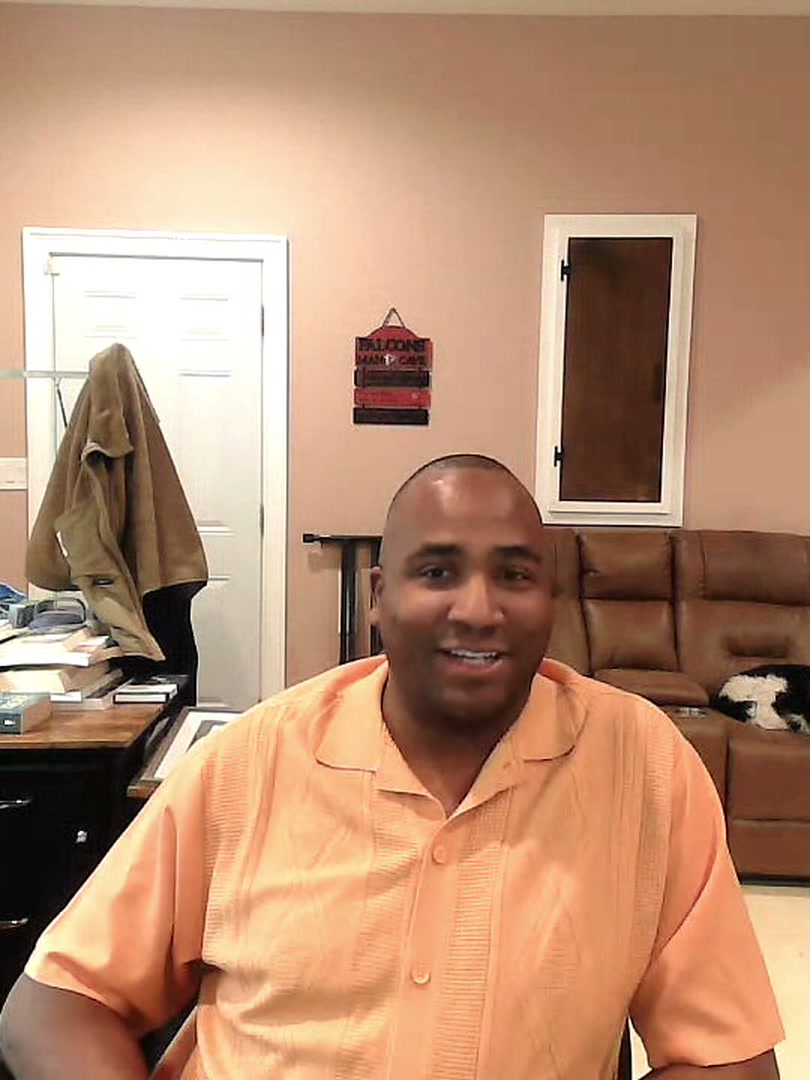
Jeff Reed opens the show on digital-first church planting, the work he did at Stadia during COVID, then brings on Earl Davis. Earl is an enlisted Air Force reservist of about 16 years. He pastored a church in Tucson, Arizona from 2013 to 2018, moved to Atlanta, and now is planting Rest Point Church in the Atlanta area. He found Jeff while searching online for how others were doing digital church. Because his military duty pulls him away on weekends, he wants to start digital first and plant physically later. His starting picture is a pre-recorded sermon at a set time with him in the chat, then midweek small groups, and in time a launch team from anyone local. One of his fears, he says, is doing too much too soon.
Earl does not want to pull the people he has mentored out of their own churches. Jeff pushes back: invite them and let God do the moving. It is not stealing, he says, to give God an opportunity to move in somebody's life. He suggests asking trusted friends to help for six months to jumpstart it, because a digital team grown from strangers takes time, and adds that a sub-100-person church plays very well in digital space. He contrasts the launch-large model, where a planter can drop $300,000 on a project, with what Earl is doing: something organic that grows slowly, which in digital space means being very relational. It's not so much about the Sunday sermon, Jeff says, as about content that engages and connects with people.
Because Earl's goal is a physical church, Jeff says the digital relationships have to feed into physical ones, since a physical relationship gives more accountability than a digital relationship. He recommends micro watch parties: a pre-recorded message and a YouTube playlist of worship in a couple of homes, with two people facilitating, where the tech is an Apple TV and a YouTube. Earl asks how to build a committed core team, not just followers. Jeff's answer is to meet people on the platforms they use and move them into an asynchronous community, which he describes as community that exists outside of time, like a group text. Pick the platform your one will use: soccer moms, he says, will never go on Discord. He suggests finding local groups, such as a neighborhood dog-walker group on Facebook or Nextdoor, engaging there, and inviting people in. It doesn't have to be preachy, he says, but you're not afraid of who you are.
Jeff walks through BLESS, Dave Ferguson's evangelism process: begin with prayer, listen, eat or share experiences together, serve, and share your Jesus story. The more others talk digitally, he says, the more they will trust you, and preaching from a soapbox digitally never works. He tells of a well-funded church plant in Miami that drew 350 people on its first Sunday, then 160, then 50, and was about eight people in a house church six months later, because the planter underestimated the trust a core team takes. So Jeff recommends a small group or cell group structure, launching the digital church as a church of small groups, which he notes follows Stadia's model too. He tells of a retired nurse in Indiana who watched her church's service on an iPad at a care home until 12 or 15 residents gathered round, and the church trained her to lead a microchurch there.
Earl asks how to define critical mass. Jeff's rule of thumb is 10-10-10: 1,000 people connected on social media, 100 of them in a digital community, and 10 bought-in leaders. He says TCD's own numbers follow it, with 6,000 to 10,000 connected digitally, about 1,500 in community and 30 to 50 actively serving. When it's time to gather physically, he warns, people outside Atlanta may feel left out, so plan to be truly hybrid, which is more than putting a service online. He cites Pushpay's 2025 State of Church Tech report, which says 93% of churches consider their ministry hybrid, and points to @ChaplainStacyKnapp's church, Lyrical City Church in California, as one that lets digital community be digital.
Asked about the biggest mistakes, Jeff says lean into small groups over a church service mentality, and don't get stuck perfecting content. Content is a necessary evil, he says, and version one is better than version none. He uses Ai for much of TCD's content so that pastors can spend their time on what only they can do: relationships and conversations. On platforms, he calls Facebook mostly boomers and global, Instagram one of the best across the board, YouTube used by everyone, and TikTok younger. The goal is to go where people already are; TCD tried its own community on Mighty Networks and struggled, so it now uses WhatsApp. For a church aimed at gamers, his tools would be TikTok, Twitch and Discord.
@ChaplainStacyKnapp asks in the chat whether Earl's core team will meet online or locally. Earl says he already thinks in Jeff's 10-10-10 terms: a digital core team that stays digital, and the local people from that community becoming the physical core team. Asked about a prayer team, he names his wife and four or five older mentors in Florida, Georgia and Arizona. Jeff promises to connect him with Stacy, and wishes him well in Stadia's Discovery process in February or March.
Jeff Reed: all right hey everybody welcome to becoming the church digital we've got uh if you're joining us online you've enjoying the pre-show we've got uh chill hop playing in the background it's not so much about chill hop bye chill hop see you later but taking chill hop out now uh love me some lo-fi to start the broadcast and to kick off the day. I actually, I named my car Lo-Fi Lola, which is irrelevant to this conversation, but just love me some Lo-Fi.
Jeff Reed: And my, what do they call it? The Spotify streamed or whatever it is at the end of the year. It's either my daughter who plays music on my account all the time. It's either her Final Fantasy music, which she's like obsessed with the music of the Final Fantasy video games, or it's Lo-Fi, which is usually some Japanese name of somebody i don't know that's not racist it's just like incredible stuff although i did it was
Earl Davis: Hmm.
Jeff Reed: funny i was listening to one guy that recognized the name and it was cortesis which is greek and there's not that many cortesis in the world and so i said to i said to a buddy of mine whose actual last name was cortesis i said hey do you have anybody in a musician musician in germany and he's like yeah he plays lo-fi music and i was like dude i was listening to him the other day on my car true story just this random guy that actually knew it was his brother uh panos cortesis good friend.
Jeff Reed: Anyway, hey, welcome to Becoming the Church Digital. I'm Jeff Founder of the Church Digital. I'm looking forward to another conversation today. We normally stream at two o'clock, and so we're a little off schedule today.
Jeff Reed: I apologize, but I really wanted to have this conversation today talking about digital first church planting. A lot of you remember back in the day when I was at Stadia, we were planting, especially in COVID, we were planting a lot of churches, physical churches doing digital first, helping physical churches adapt to digital, And a lot of you are still in that realm of physical and digital and recognizing the opportunities that digital can do that maybe physical can't.
Jeff Reed: And so I ran into, I had a conversation, to be honest, I don't remember how Earl found me. And that might even be like the opening question. Earl, how did we even get here? But I've got Earl Davis coming on right now, church planner starting up. What is, oh my gosh, you just blanked on the name of the church, Rest Point Church. Am I right there, Earl?
Earl Davis: Yes, that is correct.
Jeff Reed: All right. Very, very good. And so, so glad to have you on. Forgive me, Chaplain Stacey is correcting me just right off the top of the bat. I'm so glad she did. Happy Veterans Day for those that are observing here in America.
Jeff Reed: I know that's a holiday. I appreciate my wife and kids have been home. I got to sleep in a little bit, but honestly, I spent the day working. Sorry, but do want to honor the veterans.
Earl Davis: Yes, me too.
Jeff Reed: And thank you. Thank you for doing that. But Earl, man, thanks for jumping on the stream and having the conversation. Really, the focus here is digital firsts, where we start by growing the church, the entity, digitally.
Earl Davis: Yep.
Jeff Reed: And eventually then growing it into a physical location. That's the plan. We've had lots of conversations previously with other churches that have done this. To be honest, Earl's one of the more recent ones that I've heard. I haven't heard digital firsts in a while. Which is why when he said he was doing it, I was like, oh, dude, we got to talk.
Jeff Reed: That's really exciting. So, Earl, man, tell us a little bit. Give us your story, your background. Who are you? Why are you planning a church? Like, what's the story?
Earl Davis: Okay. Yeah. Thanks for having me, Jeff. Appreciate it. So I'm Earl. I'm 45 years old, married.
Earl Davis: Got a couple of kids. My wife and I raised some foster kids. They are all in their 20s now and living all over the world. And then we had our biological kids. We did it backwards.
Earl Davis: We didn't get the memo apparently right so so we have a we have an almost four-year-old toddler and we have a six-month-old daughter so we got a boy and a girl and they are awesome [names withheld] my wife is [name withheld] we've been married for 16 years and I'm actually in the Air Force as we speak so I'm a veteran too I'm in the Air Force Reserves so I do that thank you for your support I do that
Jeff Reed: Oh, thank you for serving.
Earl Davis: once a month, just got back from Indiana for my military duty and looking to transfer back locally to where I'm at. I live in Atlanta, Georgia.
Jeff Reed: Okay.
Earl Davis: I've been doing my military service out of Indiana for about a year, and I've been in the military about 16 years in the Air Force Reserves.
Jeff Reed: Hmm.
Earl Davis: Enlisted side for those that are vets. I'm not an officer. And then I got a couple of dogs behind me, you can see them sleeping on the couch, you know, one you can see, and there's two of them over there, but two golden doodles, and those are my coworkers during the day because I work from home, I work for a missile contract company from home, doing it for about four years, and I was a pastor from, I think, 2012, no, 2013 to 2018, so about six years,
Jeff Reed: Okay.
Earl Davis: Me and my wife pastored a church in southern Arizona, Tucson, Arizona. We closed that physical church, moved out here about seven years ago to Atlanta. And we've been out here ever since. And I got the ministry itch again to pursue. And, you know, I'm very involved in my local churches and really, really involved. I do small groups, things like that.
Earl Davis: But I really wanted to get involved in pastoring again, and I was doing some research about online churches, saw what people were doing, and did some Google searches, and you're one of the sites that popped up, and yes, so I was very surprised to find something that was doing what I was looking to do exactly, because I was like, whoa, I don't want to see this model everywhere, let me do some research.
Jeff Reed: yeah one of the crackpots very very cool it's good to know we still own google
Earl Davis: And then there you popped up. So there you go. Yep.
Jeff Reed: awesome very cool so i mean ultimately it's not you're going back and forth between indiana for for the military hoping to get transferred down but the goal is to plant a church
Earl Davis: Yes.
Jeff Reed: somewhere in uh georgia area like are you actually in atlanta proper or what's your
Earl Davis: Yeah, so if you're not from Atlanta, we'll just say we're from Atlanta.
Jeff Reed: it's yeah yeah i know there there's like sub there's sub community communities all over that
Earl Davis: But if you live-- Yeah, but if you live local, then I'm near the Stone Mountain area, Gwinnett County.
Jeff Reed: space so very cool okay all right
Earl Davis: So right outside of Atlanta, you know, traffic's a little crazy. Atlanta, we're about, it's about a 20-minute drive to Atlanta for me on average, yeah.
Jeff Reed: yeah what's the what's the itch to i mean you you you've done pastoring, you're doing some military stuff, contract, you know, and that's a, you know,
Earl Davis: Yes.
Jeff Reed: that's a good gig. You work from home and, you know, you don't get yelled at directly, but you get the check mail to you.
Earl Davis: definitely just I feel called to be a pastor
Jeff Reed: What's, what's the itch to get back into the church space? Like what, what was the, what's the, the motivation there for that?
Earl Davis: I felt called since I'm 45 years old I could turn in 46 the day after Thanksgiving Day so when you're eating your turkey think about me okay
Jeff Reed: No, okay.
Earl Davis: but yeah but you know since my early 20s I really felt called to be a pastor and so just really aligned my life and my all my all my focus and research and studying was focused to be a pastor i'm informally trained i don't have any seminary degree or anything like that bible college even though i do have a bachelor's degree in associates and other things
Jeff Reed: Sure.
Earl Davis: and i'm working on my master's right now and something else so but but nothing formally in the theological space as of yet but um but i do consider myself consider myself a student student of the word and uh and have preached you know throughout the the nation priest in in jamaica some other places too um canada things like that but um just really felt like this is a good time to look into you know starting a church you know my kids are young so i so i i kind of have that mindset of let me not get let me not do the physical piece yet but let me do something that sets that up for later on so i'm i'm more of a you know i think big picture and i know that in uh you know i got four years left in the military before you know they don't get any more of my weekends you know ever again so i got four years left in the military and um so that's why this timeline makes sense for me started digital church in a couple years started physical church And then right as I'm transitioning out of the military, focusing on that more and more.
Jeff Reed: okay so let's let's let's talk about that um so you're one of the reasons is you've got a
Earl Davis: Yes.
Jeff Reed: military commitment on weekends and things like that that's going to pull you away and so you want to slow down the church launch itch a little bit by by doing it by launching a digital church or a digital first church um it's always interesting because you know i can't i can't tell you you don't know me that well but i can't tell you how many dozens hundreds of people freak out when you
Earl Davis: Yeah.
Jeff Reed: say digital and church in the same sentence so so that's already really intriguing and what i love about this is i didn't have to convince you you came to me wanting to do the idea i just want to say that for the record because so often i have to convince people um but tell me a little bit here when we say when you say digital church like what what are you envisioning what what's like in in your head what's this thing going to look like for you what what are you comfortable with what of questions do you have?
Jeff Reed: Talk to me a little bit about the model of the digital church.
Earl Davis: okay so right now it's it's it's just more pieces than it is solid solidified so i'm still trying
Jeff Reed: Yeah, 100%.
Earl Davis: to gather how it should look but i would say ideally it would be maybe like a sunday or saturday um service um it can either be pre-recorded sermon or not um i'm open to both So I think I'm looking at more of a starting off a pre-recorded sermon, you know, do a set time on a Saturday or Sunday where it's still live, but the sermon itself is pre-recorded. And I would just be involved and maybe the chat and maybe involved with the after service comments. I'm not sure about the worship piece right now. probably just look you know some music that plays worship something done professionally that people can sing to i am not a singer even though i've led i've been a worship leader at a few churches i should not have been there's way better singers than me my wife is an excellent excellent singer so that that that that's carried me over the years um so you know just more of a of a pre-recorded service and then um to give people a chance from all over the nation and even the world to to log in watch the pre-credit sermon live you know and then maybe over another three to six months maybe do a live sermon once a month you know as i get better at the technology
Earl Davis: you know one of my fears is doing too much too too soon you know and then also um you know eventually doing small groups for those that want to you know dive more into small groups community you know maybe a bible study of some sort midweek something that i would lead something my wife could lead you know and then and then kind of go from there and then and then also just using that over a couple years to you know build community and then if there's anybody local to atlanta that also also would not mind being part of the physical launch you know you know um inviting those that are interested in that to be part of a launch team eventually also
Jeff Reed: yeah yeah there's a story of a guy I've met with him I met him through Stadia um i i for the life of me i can't remember his name but he was he was at canada he was a he lived in canada with his wife but he was french guiana french guianan and he was he actually was planting a church digitally in french in in the region of french guiana um but he was so influential on the
Earl Davis: Awesome. Yeah.
Jeff Reed: internet on tiktok and instagram like when he planted his church of like 200 people he had another 15 or 20 different small groups that were meeting around in in different regions um around the country like micro micro churches and things like that and so there there there's a model where that works uh no he was to be honest dude was you know a really attractive 30 year old male and he
Earl Davis: Yes.
Jeff Reed: had the accent where i'm like dude i if i saw a tiktok video with you i'd probably give you my wallet like i just would do anything he told me uh i'm not saying you don't have that power but
Earl Davis: Yeah, yeah.
Jeff Reed: But it is definitely, if there's accidents, it's definitely a win.
Earl Davis: Yes.
Jeff Reed: So do you know anybody in Atlanta? Like, do you have a core group or anybody that you're connected with that anybody that's on board at this point? How new are you into this process?
Earl Davis: Oh, yeah. I've recruited no one personally. i've been living in atlanta for seven years you know it'll be um we move here in night in january january on 2019 so what is that seven years so almost eight years coming up um we did go to a local church here that church turned out to be very unhealthy over time so we just had to you know us and almost the entire church dissolved a lot of people got out of the church yeah it was it it was a situation a lot of situations going on just not a healthy overall network of churches that we were part of we did maintain some great friendships from that like the the the former pastor is one of my mentors um there's another pastor that took over that's when the thing went you know went and skydived unfortunately you know um and and that's a whole other topic just does what i'm interested in in in you know sustainable healthy churches you know not not led by legalism or fear or manipulation um things like that so um so we have we have we have a lot of good friends that live local you know um they all go to their own churches you know i personally attend two different churches i'm actually a part of two different churches i go to one-on-one sunday twice on twice a month and then i go another one twice a month and i just tithe to both and i serve in small groups at both and and and uh one's a one's large and one's larger
Earl Davis: they're large churches um and then i've done a lot of mentoring over the years i have a lot of people i've mentored a lot of them still live local um i don't feel i haven't prayed about it yet but i don't feel led to pluck them out of where they're planted in or where they're rooted in just to follow me now they want to jump in and follow and that's another conversation we can have um but i'm i'm trying to make sure that everyone that i know knows that hey i'm gonna go better church you know and i'm not really inviting you to join unless you feel led you know
Jeff Reed: Yeah.
Earl Davis: So, yeah.
Jeff Reed: Yeah. I mean, lots of thoughts. We'll cover some things. The biggest thing that you probably need to do to get started is get some people to join you.
Earl Davis: Okay.
Jeff Reed: It's, you know, things like, is your wife, is your spouse comfortable? Are the kids on board? Are they, is there any tension around that?
Jeff Reed: Like, and that's, when you go through, I know you're also talking with Stadia Discovery. that's that's going to be the number one thing man who do you have on board with you even even
Earl Davis: Absolutely. Yep.
Jeff Reed: in a digital environment um trust me you know it's funny we've got stacy's kind of blowing up right now um i i feel the tension she's the recruitment tension which i'll get into in a little bit um stacy have i actually ever met you in physical space i'm actually i i don't i don't think i have um and and stacy i would say is and it's i'm not saying it's rare but it takes time to build
Earl Davis: Awesome.
Jeff Reed: digital relationships to the level yeah stacy's like no we've never we've i've never actually met her i've known stacy she's part of our senior leadership team she's the chaplain um i and so i i talk with her regularly we're we're connected on on many different levels but i've never been in the same space as her um and it took it took several years of relationship to get to that level
Earl Davis: Okay.
Jeff Reed: of trust and so like it'll take time to grow this this digital team organically what i would suggest is you kind of um you know pour some gasoline on the spark a little bit with some some ringers some people you do know some people that are willing to to do it uh some so i'm going to tell
Earl Davis: Yes.
Jeff Reed: you what i would say and i'll tell you what stadia is probably going to say um what i would say is hey bring in ask some people like i totally respect your hey man i don't want to steal people from other churches that's god's job your job is to to invite people all right you invite
Earl Davis: yes yes it is yes
Jeff Reed: people and and let them ask god and let them have the conversation you are actually depriving god from working in somebody's life by not having the conversation that's actually what stadia would say And I agree with it.
Earl Davis: I like that yeah
Jeff Reed: It's not Church X's person. It's not Church Y's person. It's not your person. It's God's person. And if God opens the door through the Holy Spirit one way or another, that's not stealing.
Earl Davis: That's very true.
Jeff Reed: That's giving God an opportunity to move in somebody's life.
Earl Davis: Yes.
Jeff Reed: And I'll tell you at a personal level, I have been in churches where I've been stuck that people wanted to talk to me and didn't. And there have been situations in my life where I moved people, I asked people, and I was able to pull them out. And I was able to see where God did incredible things in a new location with a new vision. And so, man, I would challenge you to dig into that and take that approach.
Earl Davis: I like that.
Jeff Reed: Even, and this is what I would add on to it. Hey, you know what, man, I would love if you would even just pray about coming on for six months, help us jumpstart, help us get started, help us host something every once in a while. Like even if it's to test the waters, especially in digital environments, people are I did that with Stacey for a long time. You know, Stacey was a I joked that she was like the oddball in the community. She didn't fit in. And I actually I was joking.
Jeff Reed: I was like, I have a Stacey clause because Stacey's the one person in the community that doesn't fit in. I'm not really sure why she's here, but, you know, I'm going to continue to just engage her until I can figure out where she kind of fits in the puzzle. And, you know, we figured it out and it's been great since I'm really like picking on Stacey. I'm glad she's here right now. But that that takes time.
Earl Davis: It makes sense, yeah.
Jeff Reed: And so if you've got some people you trust around you that can help to kind of get things going, it can go a lot faster and you get other people's kind of vision breathing into it. Does that make sense? How does the idea of challenging people, yeah, come on, if God's calling you, come, does that sit well?
Earl Davis: Yeah. Yeah, it does. It does. When I started my first church back in 2013, you know, I just I didn't I mean, I was going to a large church at the time. I was felt called to do something in Tucson, Arizona. And I just advertised, talked to people that I already knew.
Earl Davis: And then some people, people who I didn't want to join, join.
Jeff Reed: Yeah, yeah.
Earl Davis: I mean, what do you want to join, join? They just said, hey, whatever you're going to do, I'm on board. And and we're there for the whole six years. You know, so I appreciate it that, you know, we had a core of probably about eight, nine people when I started. And when we closed the church six years later, we had about 50 people and the same people were still at the church. So that was just a testimony of God's faithfulness that, you know, that even when I just told people what I'm going to be doing, people decided, hey, I want to follow.
Earl Davis: I want to join. So I think that's going to kind of be happening when I do that, you know, coming up as I begin to talk about it more and more.
Jeff Reed: And by the way, a sub-100-person church in digital space plays very well.
Earl Davis: People will get interested and want to join and ask questions. Yeah.
Jeff Reed: It's a different model than what a typical church planter would be. I know you're with Stadia, which is, in my opinion, the right play on this. Ark and some of the others will push a launch large model. Sorry, Ark friends, but the launch large where they drop $300,000 on a project
Earl Davis: Yes.
Jeff Reed: and try to get as big as possible, and hopefully it sticks and it doesn't. What you're doing is much more organic and letting it grow slowly, which in digital space means that you need to be very relational. It's not so much about the Sunday sermon as much as it is creating content that engages and connects with people. It's really interesting. The other guy that's on here right now, this is so funny that it worked out this way.
Earl Davis: Okay.
Jeff Reed: Demarcus, Demarcus, I want you to connect with our friend here at some point. Demarcus's strategy is probably a little more in line with what you need to do up front with it. Where Demarcus and his wife are creating content on, well, he's on Twitch, but he was talking about moving over to TikTok. Now, it's, you know, and the content, it's short. It's to the point. It's 30 seconds, 60 seconds, one minute, two minutes, three minutes.
Jeff Reed: It's not sermon stuff. But with that content, you get engagement with the algorithm, and you get people liking. And then through TikTok, through Twitch, through whatever platform, Discord, you start to build a relationship with the people. You start to establish that trust that enables you to move a relationship from TikTok to a Discord or from a TikTok to a WhatsApp or something like that, where you can continue to build relationships up.
Earl Davis: okay Yes.
Jeff Reed: To broadcast a service online and say, hey, show up at my friend's house, you know, show up at my house this Sunday, there's not a lot of trust in that. And to be honest, the people that probably will trust you in that situation probably have some social issues and some other things that you need to serve, but not in that initial wave that's coming in. And so the goal is for you to be very relational with people and to be able to start, once again, with people that you know in the room that can be the critical mass to help in those startup situations is going to be so important. Has anybody talked to you about watch parties or microchurches or things like this? Have you heard any of this terminology yet? It's fine if not.
Earl Davis: I've heard a little bit that, yeah, that's kind of when you're building your launch team.
Jeff Reed: Okay. Yeah.
Earl Davis: You're kind of putting together, sometimes it could be a meeting, sometimes it could be a mini-service of some sort. I've heard different ways, but it's almost like an interest party, it seems like.
Jeff Reed: That's right.
Earl Davis: Or it keeps the interest going if they've got a launch date that's further away.
Jeff Reed: Now, there's a little bit here where you're going to meet people digitally, and you're going to build a relationship digitally, but with your goal of planning a church in physical space, you need to start also keeping them in physical context. Now, a physical relationship gives more accountability than a digital relationship. I love Stacey. I love DeMarcus. They're friends, and I'm involved in their lives as much as we are intentionally communicating with each other. Stacey tells me her father passed away.
Jeff Reed: I'm texting immediately, trying to help and to resource and praying with her digitally through things like that, because there's a two-way communication. Stacey hasn't done this, but if she disappears for like two weeks, she's three time zones away from me. I don't have the physical relationships to be like, hey, what's going on, or come knock on the door. And so as you're building up this team with the understanding that you're eventually growing this in the physical space, there needs to be a physical element which is actually going to benefit you because there's more accountability.
Earl Davis: Okay.
Jeff Reed: You're not just looking for physical church attenders, people to sit in the pew. You're looking to develop a core team, which means that you need to have more accountability. Now, you can do that digitally. It takes time. But if there's a physical element and you're looking people in the eye and say, hey, this is what I see in you, there's a huge potential for you to do this. Would you be interested in joining me in this and casting vision?
Jeff Reed: A lot of this is much easier to do physically than digitally. And so to have those digital relationships feed into a physical meeting, especially with people that are in the area, I think that's a great goal. Even to the point of what I've done, what some people do, and what I would recommend for you are these micro watch parties. Where when to the point of where you do start creating a regular Sunday service, you can get to the place where the Sunday service is, your teaching is a very easy model. Your teaching is pre-recorded and distributed out to people to play on YouTube, on their Apple TVs or Rokus. Worship in that context at their homes.
Jeff Reed: You're asking people to gather. You've got 20 people. You're getting them connected into two different homes in different areas across Austin. So you've got 10 people in each home. You've got two people that are basically facilitating the thing. Opening prayer, a service, worship can be a YouTube playlist of four songs.
Jeff Reed: The message is prerecorded with you coming on. I mean, to be honest, tech on this is an Apple TV and a YouTube. That's all that you really need to distribute out and do a micro watch party. Stacey, it's funny, as she's on this team, she's talking a lot, but she's actually probably one of the best—Stacey, I am going to say this about your church because it's such a challenge—probably one of the best physical digital churches that I know of, where they started digital, they merged with two or three physical churches, and they've actually grown on and are trying to create a physical community as well as digital at the same time.
Earl Davis: okay
Jeff Reed: You know, it's funny. It used to be called Imagine Church for the life of me. I asked her today what the name was, and she told me. I can't remember it now. But they just recently merged into something else.
Jeff Reed: I'm spouting. What questions do you have?
Earl Davis: okay um I wrote a few down here okay so okay building a core team okay so building a core team so if i'm starting a digital church with no established congregation um how would you build a committed core team instead of you know is it just accumulating followers online followers or is it or it goes more than that for a core team um i'm good on um i mean i'm very technically savvy so i would say
Jeff Reed: Yeah. What platforms are you good on?
Earl Davis: I could use anything. I've used Twitch for video games when I gained back in the day.
Jeff Reed: Sure.
Earl Davis: I use YouTube. I use Facebook. I use Instagram.
Jeff Reed: The area that you want to plant your church, what's your average demographic?
Earl Davis: You know, I use WhatsApp.
Jeff Reed: Who's the average customer, the average person? Who's your one that you're going after with your church?
Earl Davis: Okay. I'm still figuring it out right now.
Jeff Reed: Okay.
Earl Davis: That's probably a state-year question you're going to ask me.
Jeff Reed: Yeah, that is.
Earl Davis: So I wouldn't say, yeah, yeah, you did.
Jeff Reed: I thought I asked you that, and that was the answer.
Earl Davis: Yeah, yeah.
Jeff Reed: Yeah, so the answer is some of the platforms are very good with engaging where you can build relationships. Some of the platforms are not that good at engaging and building relationships. So, for example, you know, Facebook is honestly for the feature set. Facebook's probably the best. But Facebook, you know, unless you're old, Facebook doesn't really carry the value in America that it once did. And so it's it's good to to connect with people and the types of people that would still be engaged with Facebook.
Earl Davis: Yes.
Jeff Reed: You can use Facebook for the average platform right now is probably Instagram, which is decent to build relationships. But really, if you were to do like an Instagram, I would route people as you build trust with people. The goal would be to funnel them into an asynchronous platform, which would be something like a discord or a WhatsApp or a I mean, even a WeChat. not a WeChat.
Jeff Reed: Is it WeChat? What is it? The group chat, whatever the group chat software is.
Earl Davis: When you say asynchronous, what do you mean by that, asynchronous?
Jeff Reed: Yeah, so thank you. An asynchronous is a type of software where a lot of people, it's basically, think about a text group, okay? You've got a text group and people, you've got 10 people in a text group, right? And it's your buddies.
Jeff Reed: They're sharing memes at different times. They're talking, they're laughing, they're joking together. One of you gets serious and you pray for each other in the moment. Somebody cannot check the phone for two days and come back in and jump into the community and everything's great, right?
Jeff Reed: Have you ever been part of one of those?
Earl Davis: So, I'm thinking of WhatsApp and GroupMe.
Jeff Reed: Yeah, group me.
Earl Davis: I'm thinking of stuff like that.
Jeff Reed: That was what I was trying to say. Yeah.
Earl Davis: Okay, yeah, yes.
Jeff Reed: And so a text chat.
Earl Davis: Yeah, I used to run a bunch of video game leagues like that.
Jeff Reed: oh my gosh, you're, okay, so that principle, that craziness, that realness, we need to talk
Earl Davis: And we would be on either GroupMe or WhatsApp, and that's all we did. It was craziness. Yeah.
Jeff Reed: about the church digital, we got, I got to pull you into some stuff over here and help out with us, but the principle of what you're talking about, we call that asynchronous community, It's it's community that exists outside of time.
Earl Davis: Okay. Mm-hmm.
Jeff Reed: And so my my challenge to you is is connect community, equip, connect community and plant would be for you. You're going to connect with people via social media, whatever, platforms that you want to do digitally. But the goal is not to get these people to show up somewhere, not go from Twitch to physical space, not going from TikTok to physical space. It's TikTok to an asynchronous community, Discord, whatever platform you're comfortable with. one, what you're comfortable with, two, what your one is comfortable with. If your one is more comfortable, if you're a bunch of, if you're going after a bunch of soccer moms and you want to get soccer moms on Discord, I hate to tell you, but soccer moms will never go on Discord.
Jeff Reed: And so you've got to acknowledge once you figure out who your one is, because it's only good if you know how to use it, and it's only good if they will actually use it. Does that make sense?
Earl Davis: that's good that's good yep that makes sense yep
Jeff Reed: Yeah. And so you
Earl Davis: okay
Jeff Reed: use that asynchronous community to establish trust and to build relationships. That's the goal. You're getting them to trust you. And at the same time, you're figuring out how much you can trust them and what role you want them to play in the team, in your leadership team.
Jeff Reed: And the more people that are in that community that you trust, that can be part of the
Earl Davis: Yes.
Jeff Reed: conversations, you know, officially or unofficially to help you process and to be critical mass is good. This is why I'm saying some of these people that are with other churches, dude, I don't really need you Sunday at 9 a.m. I need you to answer. I need five minutes a day for you to check your notifications and engage in this chat room.
Jeff Reed: You get 20 people to do that. You've got 20 people right off the bat that are critical mass in that community. So when that straggler walks in and thinks it's crickets, it's not going to be that way because you've got 20 people immersed and
Earl Davis: Okay.
Jeff Reed: engaged. Now, maybe they're ringers where they're just pretending to be active people, which is fine. Bring ringers, establish that culture. But an active digital community is going to give you an opportunity to build that relationship and that trust that you'll never get by trying to go digitally to a coal church plant.
Earl Davis: Yeah, I like that. So you're saying start off someplace where they're just logging in and watching some kind of content, but the goal would be to get them to join some type of a group me or WhatsApp of a group that they're participating in throughout the week or in months, and then that can particularly become more small group
Jeff Reed: Yeah. Yeah.
Earl Davis: or even a physical launch. Okay.
Jeff Reed: Exactly. So if you were to connect, like let's just tell me the name of the area again it was um atlanta but outside of atlanta what was the what was the community stone mountain so you go into that's the area i'm just making
Earl Davis: Oh, it's like Stone Mountain area, Stone Mountain area. Yep.
Jeff Reed: this up but it's probably actually a good idea go into into find the facebook group stone walker
Earl Davis: Yes.
Jeff Reed: georgia stone mountain georgia dog walker group people that live in you know there's plenty of
Earl Davis: Yeah.
Jeff Reed: ways. There's so many different ways to find areas.
Earl Davis: yeah right now i'm part of a group that does something like that i think it's called like like neighbors something some kind of a neighbor like trending on network yeah yeah yeah yeah it's called next door and so yeah
Jeff Reed: Next door is a great example. Next door is probably what you're going to hear a lot of is somebody says, is that gunfire? Because somebody's car backfired two blocks away and they always freak out that it's gunfire.
Earl Davis: yes it's true it's true That's good, yeah.
Jeff Reed: But that's where You engage, you respond regularly in communities like that. You start to build relationships with people. And then you funnel that relationship out of neighborhood, out of the dog walkers of Mountain Creek Facebook group. And you start to funnel that into your group where you start to talk with them directly about things and send the memes, be community, be funny. It doesn't have to be preachy, but you're not afraid of who you are.
Jeff Reed: You're putting that in. What I'm describing to you is a digital evangelism process.
Earl Davis: Okay, okay.
Jeff Reed: I wrote a book. Well, Dr. John Harrison, I wrote a book. But we took—do you know who Dave—oh, my gosh, I just forgot Dave's name. This is really embarrassing. I started to say Dave Adamson. That's not the right book.
Jeff Reed: Dave Ferguson, it's behind me. Do you know Dave Ferguson from Exponential? If somebody tells Dave Ferguson I forgot his name, I will never speak to you again.
Earl Davis: I've heard the name. Yeah. I've definitely heard the name. Yeah.
Jeff Reed: Okay, yeah, so he wrote—it's a pastor. He runs an organization called Exponential, but he's good friends with Stadia.
Earl Davis: Yes.
Jeff Reed: He wrote a process, evangelism process. Anytime you want to share Jesus, and you do this within your neighborhood groups. You do this within the Dog Walker Facebook group. You do this digitally as you're connecting and creating content.
Earl Davis: Mm-hmm.
Jeff Reed: Begin with prayer. B, pray about the situation as you're going in. As you start talking to people digitally, you listen more than you talk.
Earl Davis: Okay.
Jeff Reed: The more that others talk digitally, the more that they will trust you. If you come on and immediately tell them what to do, they're out because they don't need somebody on a soapbox. But your listening to them actually gives credibility to what they're saying, which means that when you do speak, they'll listen. So you listen, begin with prayer, listen, shared experiences together would be the third. Talking about things, you know, playing games, joining a tournament league, if that's who you're going after.
Jeff Reed: As you find your one in your community, you're going to have to figure out how to do shared experiences, whether that's digital experiences, whether that's physical experiences, watching a movie together on Netflix, doing a watch party, inviting a whole bunch of people over to the house for a football game. Whatever it is, you're using shared experiences to build and strengthen the relationship.
Jeff Reed: Number four, B-L-E-S, the first S would be share. I'm sorry, it would be serve. You're finding ways to serve them. You are serving the people. Once again, it's part of listening because you're putting yourself in a humble approach. You're not putting yourself in a posture of telling.
Jeff Reed: You know this is a small group leader. You're building that relationship together. And then the second S is share your Jesus story. So you go through a process of where you're not on a soapbox preaching digitally, which never works.
Jeff Reed: Instead, you're doing a relational approach. And so you're connecting through Nextdoor. You're connecting through Facebook groups. You're connecting with content that you're creating in Facebook and targeted ads that you can do in your neighborhood.
Jeff Reed: You're connecting through videos of TikTok, and Twitch videos that are going after year one. You're connecting in all these creative spaces. But the goal with all of that connection level is to get them into your digital community where you can properly build a core team.
Jeff Reed: And that core team level, that community,
Earl Davis: okay
Jeff Reed: it's really where you're going to need help with some critical mass to come in and say, hey, be my cool people in here and create a culture of engagement and dialogue. So the lurkers on the outside will feel comfortable coming in.
Jeff Reed: The lurkers will always lurk. There's nothing wrong with lurkers.
Earl Davis: so so follow up on that core question
Jeff Reed: It takes time for them to trust to come in.
Earl Davis: i like that so i'll follow up on that core question jeff is um what does like what is a
Jeff Reed: Go ahead.
Earl Davis: healthy like um digital quarantine look like at you know 10 people 25 people 50 people like what does it look like as you grow those numbers
Jeff Reed: Yeah. A lot of it depends upon how technological you're going to be and who your one is. And so, like, because there's a technology component on this that I'm going to ignore. And whether you're just a Facebook, Instagram person, that's very simple. If you're Twitch streaming, that's a whole other complexity level. So let's set that aside.
Jeff Reed: Essentially, to be honest, you want to have a leader that's responsible for X number of people. and say, hey, I, cause, cause you're, you're all about building relationship. You've got a year and a half to build relationship to eventually get them to the place of, of launching a church where essentially you're probably going to be doing a setup and tear down or, you know, in some,
Earl Davis: Yes, yeah, some school somewhere, yeah, movie theater, you know.
Jeff Reed: um, in some school or some movie theater, best case scenario, you're, you're, you're, you know, buying some rinky dink trash church that you're going to have to rebuild. And like, but that's,
Earl Davis: Yeah, yeah.
Jeff Reed: you know, that's a big ask in itself too.
Earl Davis: Yeah, it's true.
Jeff Reed: But so you're building the relationship.
Earl Davis: Yes.
Jeff Reed: I'm kind of like taking Jesus out of the equation of church here a little bit, and I apologize because I'm just really strategy right now. But you're building the relationship to the point where they're bought enough into the vision that they will serve in that context. There was a church here in Miami, and the guy came in.
Jeff Reed: He was from the Carolinas. He was from a mega giga church, I'd say the name and everybody would know where it is.
Earl Davis: Mm-hmm.
Jeff Reed: I'm not going to do that. But he was on the C-suite and he went to plant a church in Miami, came down here, dropped six figures a couple of times over on planting his church in Miami. I just happened to know somebody and kind of came in on the outside to kind of help at the last minute, launch the AV for this church. The first week they had 350 people show up at the church.
Jeff Reed: All the marketing and all the door hangers and everything, it worked. everybody was excited.
Earl Davis: Okay.
Jeff Reed: Then all the official people went back, left Miami to go back home. Second week, they had 160. A little nervous, but hey, you know, after first week, second week, there's always a dip. It's all right.
Earl Davis: Yeah.
Jeff Reed: Third week, they had 50. And at the end of six months, there were like eight people that were in a house church. Now, Miami, and especially where this church was launched Miami's a pill and and one of the things that that this guy said like man what what happened he's like Jeff I thought people were bought in but the people that I thought were bought in I never never showed up like when it was time to actually do the thing didn't and so his core time his time to build up the core team he underestimated the amount of of that trust and that equity he needed to give in reality he we only spent like a couple months down here and hispanic culture is way different than where where he was coming from and like i'm not i'm not predicting this for you but the reality is is that digitally it takes time to build that relationship and so the more that you can supplement physical and supplement accountability where you have like a volunteer who's following who's literally accountable for seven people what's going on in their lives, what's going on.
Jeff Reed: You know, small group structure, cell group structure is actually what I would recommend. Your digital church launched with a whole bunch of small groups, and you're using that digital connect layer to get in front of people, to invite into your
Earl Davis: Yes.
Jeff Reed: digital community to be a church of small groups. And Stadia will tell you that that follows Stadia's model for planting, because they're all about that small group in that community. And at some point, it'll make sense for you to pivot from just being a community of small groups to being a community of church where we're actually gathering them all together on Sunday morning.
Jeff Reed: To be honest, I would be the radical guy saying, why do that? Just keep meeting as a community of small groups and distribute the services to micro churches and be much more focused. I would look at, And this is just me talking radical, but I would look at planting and starting these micro-churches in different communities and areas with different niche markets where the ones are different.
Jeff Reed: And then you're able to actually hyper-focus on those ones in those areas.
Earl Davis: Okay.
Jeff Reed: But you've got to find leaders that are passionate enough in those areas to dive in. An example, there was a church up in Indiana that had a—it was about a thousand-person church, but they had a woman who served every week just helping. She was a retired RN, registered nurse, and she served every week at a recovery home for—oh, man, I always forget the disease, but it was some terminal disease. And she would go in, and this is a true story, she would go in and she'd open up her iPad in the recovery room, in the activity room at this recovery center, where basically patients are going to die, where family members are coming to watch their patients die, and where the people who work there, the nurses and doctors, are surrounded by death all day long. And she would go in with just her iPad and watch the service. And it started where one person would sit next to her watch, then like two or three people, then five people.
Jeff Reed: I have a photo that the pastor sent me where there's like 12 or 15 people huddled around, some looking the other way, watching this little iPad. And it was texted from the lady where the lady was asking the pastor, can we get something better than an iPad for these people to watch? And so what they ended up doing was they ended up launching a microchurch. in there with this lady who's the registered nurse they actually started to train her to be a shepherd where she could spiritually lead people that were in this in this hospital in this recovery whatever the retirement home whatever whatever it was called um uh and so like she would she would lead services in there but the primary of the service was watching it but in addition to what was happening sunday she would come in during the week she would meet regularly she would pray she would occasionally attend staff meetings and be a part of what was going on with the staff, she was building relationships and accountability in that niche.
Jeff Reed: Now, that's an example of where
Earl Davis: - Okay.
Jeff Reed: those types of people are not coming to a church service, but you're able to, because digital is
Earl Davis: Okay.
Jeff Reed: so malleable and so shapeable, you're able to get that into a unique spot and still utilize some physical relationship and physical accountability with it. Is this helping? What other questions do you have?
Earl Davis: Okay, so you mentioned like critical mass, mentioned that earlier um let me see my question is on that um okay so how do you um define critical mass for a digital church
Jeff Reed: Yeah.
Earl Davis: and what indicators would tell you that it's time to consider physical gatherings
Jeff Reed: Man, that's hard. I would say that, so for me, it's 10-10-10. Let me get my numbers right.
Jeff Reed: I would be connected to 1,000 people at the superficial level, at the connection level. You've got over 1,000 social media followers, okay? Of those 1,000 followers, you're probably going to get 100 people that are in a digital community. So 1,000 people are making the jump from just being aware of what you're doing on social media,
Earl Davis: Okay.
Jeff Reed: and only 10% of that's actually going to get into the ground level with you, right? And so you'll have 100 people in that community. Of that 100 people in that community, to be honest, you're probably only going to get 10 followers. 10, what am I trying to say, bought-in leaders, high-level accountability type of people, people that you can ask them to do something and trust that they do it. And so basically 1% of what's on the top, 1,000 really is just 10.
Jeff Reed: I mean, to be honest, I'll say in my context with the church digital as well, that really maps in churches as well, where 1,000 people really equal 100 people in the building, 200 people in the building which is you know 10 what is the saying uh 20 percent of the 80 percent of the work is done by 20 percent of the people you know it's it really it's it's that honestly
Earl Davis: Yes, yes, yes.
Jeff Reed: it's that philosophy plus or minus um we've got we've got 6 000 in in we've got 6 to 10 000 that
Earl Davis: Okay.
Jeff Reed: we're connected with digitally i would say that we're probably uh 1500 in community in our in our core leadership teams, about 30 to 50 people that are actively serving and contributing. So, yeah, those percentages are what will hold up.
Jeff Reed: So the question for you is, what time do you actually merge?
Earl Davis: Yeah.
Jeff Reed: Because I would say that if you're going with the small group philosophy, they're having one-on-one conversations, camera to camera, person to person, or they're in small group rooms physically and houses and living rooms and coffee houses around. So there's a physical connectivity. There will be a moment where you'll feel an itch and they will feel an itch to go to that next level.
Jeff Reed: To be honest, and if Stacey's still on, you'll have some of this too. There are people that will really like the digital. There are people that you'll be connected to that are not within the range of Arizona, of, excuse me, of Georgia.
Earl Davis: Atlanta.
Jeff Reed: And in Atlanta, specifically, not in the range of Atlanta, and will be against what you're doing because they will feel left out.
Earl Davis: Yep, yep, George.
Jeff Reed: They will feel isolated from the relationship, from what's happening with the church. And so you've got to really be careful. Recognize that you're going to be involved with people that are, through a spiritual level, that are not going to be within Atlanta's area codes or zip codes. And so what are you going to do with those people once you launch? Are you going to keep them? Are you going to operate in a true hybrid mindset?
Jeff Reed: That's actually what Stacey's Church is so good at.
Earl Davis: yeah yeah i would probably do hybrid at that point that way the people that were in the beginning
Jeff Reed: Yeah.
Earl Davis: don't get left out because we're physical. Yeah.
Jeff Reed: And so what I put their name on the screen, she ended up telling me, Lyrical City Church in California. They do a really good job. of allowing the digital community to be digital. You don't know me that well. Being a hybrid church is more than just broadcasting a church service on Sunday.
Earl Davis: Yeah, definitely.
Jeff Reed: It's recognizing that digital community is community and empowering and allowing people to be church in that community at a relational level. And so we can get—that's a long conversation in itself, but churches that operate that way are few and far, far between. There was a stat, Pushpay came out with 93% or 94%.
Jeff Reed: 2025 state of church tech report, 93% of churches consider their ministry hybrid. As a guy that actually does digital ministry, I kind of find that hilarious because it's much more than broadcasting church services to do digital ministry and to just think,
Earl Davis: Yeah. It's someone, yeah, it's true.
Jeff Reed: oh, I'm putting my stream online, so therefore I've got my hybrid badge, I'm done. that's not effective. If you just want to communicate to the people that you're attending your church, that's great. But if you actually want to evangelize and reach people and connect with new people in digital spaces that are even in your physical community, it's going to take much more than just putting a church service online, sadly.
Earl Davis: Yep, totally agree.
Jeff Reed: So what other questions?
Earl Davis: So what are some of the biggest mistakes you've seen with a digital first church, like church planners made?
Jeff Reed: Yeah.
Earl Davis: And what would you do differently if you were starting a church next year, 227, in this day and age with Ai and all the platforms? What would you do differently to make sure that you're successful? So biggest mistakes and what you do differently for success.
Jeff Reed: that's um that's a really good uh a couple good questions there uh you you actually are
Earl Davis: I like that.
Jeff Reed: in the right direction um a couple things that i like about what you've said is you're a small groups guy. I would lean much more into the small group philosophy than I would church service mentality. By the way, Stadia is going to tell you the same thing.
Earl Davis: Yeah.
Jeff Reed: Start groups, start small. Accountability, even in digital, is much better. I've already beat that drum. It's much better in
Earl Davis: Okay.
Jeff Reed: small groups and buckets. And so I would continue to just keep that philosophy going. one of the biggest mistakes that I see is content. Content is a necessary evil, okay? You have to do content to connect at that top level. If you don't create content, you're not going to be connecting with anyone.
Jeff Reed: And so it's very easy for pastors and people that are doing digital ministry, we call them digital missionaries, it's very easy to get stuck on creating content. Oh, I got to get this reel to look perfect. Oh, I've got to tweak and do this, and it's not right, and it's not right.
Earl Davis: Okay, yeah.
Jeff Reed: Oh, I got to redo this entire thing, and it's very easy to get sucked in. I was actually having a conversation today with somebody. Who was I talking to?
Jeff Reed: Oh, I was talking to a pastor. I was talking to a children's pastor this morning, and I was like,
Earl Davis: I like that.
Jeff Reed: hey, do you ever do any writing? And he's like, no, I've written so much stuff, but I'm always afraid to publish it because like, I want to make this adjustment or I do this and I do this. And by the time I actually like get it to where it's perfect, it's no longer relevant and I've moved on to the next thing.
Jeff Reed: And so operate on a philosophy of version one is better than version none. I don't actually know who said that. So I'm still stealing it from somebody else.
Earl Davis: Yeah.
Jeff Reed: But, you know, just press play, just send it, just get it out there because whatever it's going to do, it's going to connect and it's going to lead to you. The reality is that one post is not in a... I have content creator friends that are going to be really mad at what I'm about to say.
Jeff Reed: But the reality is that one content post is probably not going to get 5 million likes. That one post is going to be one of many. And the way that you're going to win followers is organically, slowly building up that trust.
Earl Davis: Yes, I like that.
Jeff Reed: And so one piece is not going to change the world. One piece as a machine gun approach of 15 to 20 is much more going to establish the culture and is going to bring people connected to you. And so I would encourage to be a little overaggressive on that, at least letting it go.
Earl Davis: Okay.
Jeff Reed: I would actually also encourage Ai. I'm a big proponent of Ai. A lot of the work that I do with my clients, and I'm openly, brazenly, not all the work, but a lot of the work with the church digital, which you see us producing, is Ai. Once again, some content creators out there are not comfortable with that idea. But to be honest, the time that I have, and actually I told this to a pastor today, the time that I want a pastor to do, what's the one thing a pastor can do that nobody else can do?
Jeff Reed: Relationships, conversations, talk with people. That's what I need pastors to do. Pastors creating content, to be honest, I've got one of my clients where I'm like, hey, if you could hold up your phone and just give me 20 minutes worth of answering these four questions every week, I'll create all the content for you.
Jeff Reed: Like I can get artificial Ai to generate all the posts, the this, the this, the this, schedule it and get it so that she's got that content layer up top. Content's a necessary evil and it's very easy to get sucked into it as a pastor trying to control make it perfect you know
Earl Davis: Okay.
Jeff Reed: best foot forward wanting to look this it's it's all very important um it is important but not as important as that next level and so don't lose sight of because community community is where you're going to find the the 10 that are bought in right and so you know it's a wide net up top It's a much tighter net down below, and that's where I would encourage you to invest your heart time, not in the up top, in the bottom.
Earl Davis: okay okay I like that
Jeff Reed: Does that make sense? What else you got?
Earl Davis: um so do you have like like I guess demographics for each type of streaming platform you know like yeah I know Facebook's usually for the older platform I think TikTok's for younger Instagram's
Jeff Reed: Yeah.
Earl Davis: younger that's what you know do you have like um any type of resources on that you know
Jeff Reed: yeah yeah there's probably a blog or something out there uh some some things that we've written
Earl Davis: yeah
Jeff Reed: i'm sure i've probably written it in a book but the the heart of it is youtube is boomers at this point uh and global youtube i'm sorry youtube i said the wrong word facebook is uh boomers and uh global at this point um we're actually probably going back to facebook at some level because global so much into it but global is not your your audience so don't worry about that um instagram is is probably one of the best right now with across the board it does lean more millennial and um uh gen x uh probably more than the others uh what's interesting is that instagram you know 10 years ago was the was the the young crowd and then adults jumped into instagram and the kids went away and that's basically the trend that's always going to follow is that people go in it's it's aimed at an audience and then the older generation comes in and all the cool kids are like this is stupid there's old people around and the cool kids are going to go to some new platform
Earl Davis: Yeah, yeah, yeah.
Jeff Reed: and it just grows on so um as a general rule instagram is probably one of the ones that that you'll be looking at um because it's a very general platform and it also allows for decent community to engage with um i would also youtube youtube is the only platform that has like over
Earl Davis: Okay.
Jeff Reed: 90 engagement across all generations youtube is the literally it's the it's the rosetta stone it everybody uses it um yeah obviously you can get into tiktok tiktok is younger give it a by the time you actually launch your physical church everybody's going to be on tiktok and then there'll be another cool platform that the young kids are going after um but right now probably tiktok is is the is the base thing i i to be honest i don't spend any time in snap in snapchat um i just i don't i don't waste my time with it for for many reasons um uh uh platforms like terminal and excuse me telegram and signal um are used internationally a lot they're like whatsapp
Earl Davis: Okay, yeah, I've done Telegram.
Jeff Reed: but more powerful whatsapp yeah it may be and that's what like there are some other options
Earl Davis: I've done Telegram. - Yes, yep.
Jeff Reed: for you for that community level, to be honest, a Facebook group at that community level is not really that bad. The goal for that community level is to try to figure out where people already are and go there. One of the reasons why we're on WhatsApp, WhatsApp, technologically speaking, is a horrible platform like programming features api it's got nothing but it's already on two billion phones globally and so when i have conversations with anybody outside the u.s it's
Earl Davis: yeah exactly it's very popular yeah
Jeff Reed: like hey we're on whatsapp and so it's a no-brainer for us because when i post they're already checking
Earl Davis: yes
Jeff Reed: the inbox we created a community we use the platform called mighty networks it was like a paid version of facebook groups not put out by facebook but somebody created a product similar to that and um and it was the same deal where it was it was a different inbox and so your content has to be so good to get people to come in and check that inbox on a regular basis and to be honest because it was basically it was like it was like another email address people had to check so when we created our own community we really struggled to to create that and so instead we've opted to put communities where people are instead of already trying to create an additional
Earl Davis: That makes sense, yeah. Yeah.
Jeff Reed: community. It's funny. I was actually challenging this own idea and trying to wrestle with us launching an app today. But as I'm talking in my head right now, I'm like, yeah, don't do that. Anyway, you understand what I'm trying to say here?
Earl Davis: Yes.
Jeff Reed: Okay.
Earl Davis: You're saying go where people already are, and then there's certain platforms that are universal, like WhatsApp, Telegram, YouTube, that you get more bang for your buck.
Jeff Reed: Exactly. yeah youtube youtube is in a universal yeah
Earl Davis: And then you talk about TikTok being younger now, but in five years, there'll be another TikTok out there version, and all the kids will be there.
Jeff Reed: yeah the more that you lean on like the tiktoks um and specifically tiktok uh and somebody can correct me i'm pretty sure you can't tiktok goes everywhere and so it's really hard to focus tiktok on a geographic area. You can focus Instagram and Facebook because meta allows for the focusing,
Earl Davis: Yeah, I like that.
Jeff Reed: but TikTok cannot. TikTok has its own strengths. And if you were telling me, I want to launch a digital church aimed at gamers and whatever, I'd tell you, man, you got three tools in your tool belt.
Jeff Reed: It's TikTok, it's Twitch, and it's Discord. And I'd introduce you to two or three people
Earl Davis: Yes.
Jeff Reed: that are running that playbook and are doing well with it because you're trying to go after, you know, a community in, in, in Georgia, in Atlanta, you know, it's, it's a different playbook and part of it, you know, I'm, I'm kind of not being, I'm being non-specific here because it really comes down to your one. If your one's a 31 year old male, it's one thing. If your one's a 47 year old male, it's a completely different playbook.
Jeff Reed: And so it's, it's kind of understanding some of that as you'll start to discover as you're going through this process.
Earl Davis: okay I like that yeah so that's about my questions right now for this session I
Jeff Reed: What else you got?
Earl Davis: know I've got we've been on it for an hour and I appreciate it I don't want to have too much information where my mind blows up but you give me a lot to think about a lot of good nuggets and I look forward to looking over that looking over this again, because I know you're going to send me a copy of the video.
Jeff Reed: Yeah.
Earl Davis: So I'll scan it again and make some notes and have some more questions for you next time. Yeah.
Jeff Reed: 100 percent so you can uh this will be i'll send you the link but this will be at uh the church.digital slash i think 383 is what this episode will come out to be uh we'll the ai i'll chew on it tonight and we'll send you some stuff and and uh and that'll be good but the the the video transcripts other things will be available and we'll send it to you but
Earl Davis: Okay.
Jeff Reed: But, man, I'm excited. Oh, here. Let me see what she says here. She was interested. Pastor Earl, are you establishing your core team digitally that live locally? Like, do you want your, I guess Stacey's asking, are you trying to get your core team to engage only online?
Jeff Reed: Are you planning on the core team meeting in physical space?
Earl Davis: So, the way I viewed it was I kind of already had your mindset of the 10, 10, 10. So, I kind of have a mindset of like a hybrid.
Jeff Reed: Yeah.
Earl Davis: Like, okay, digital church will stay digital. Digital core team will stay digital core team. But as I built the community that that core team helped me build, some of those people that are local would then become the physical core team. So, almost like two different core teams, two different processes, I guess you would say. I appreciate that.
Jeff Reed: I'll tell you, and Stacey said this earlier, I didn't share it. If Pastor Earl has a prayer team, I'd like to know more about it.
Jeff Reed: Stacey's very passionate about prayer, but she is very highly understanding of digital culture as well.
Earl Davis: Okay.
Jeff Reed: And so I'll...
Earl Davis: Yeah, my wife right now, my prayer team, my wife, And I got about four or five good older men that are mentors that live various places, Florida, Georgia, you know, other places, Arizona.
Jeff Reed: Yeah.
Earl Davis: So I got quite a few older Christian, you know, mentors that I lean on. But my wife, my wife, my prayer team, and I know that prayer, Stacey, it's like we need prayer. That's like if we don't have prayer, ain't never going to happen for me. It ain't going to go nowhere, you know.
Jeff Reed: very good so i i've got i've got some information on stacy i'll send you stacy's email let the two
Earl Davis: So definitely, yes.
Jeff Reed: of you connect i know she's busy with job and things but she's always always good for a conversation and some some encouragement as as well on that so all right hey listen as as we're
Earl Davis: I appreciate that.
Jeff Reed: landing the plane here uh pastor earl mr earl are you do you call yourself pastor yet or what what are you all right earl as we're we're landing the plane here any any any closing thoughts man
Earl Davis: I've been a pastor. People still call me pastor, but Earl's good. You know, it depends on where I'm at today, you know.
Earl Davis: This has been great. This is what I'm looking for. I was looking for some wisdom that I don't have about digital churches and about planning churches, specifically physical churches and digital churches. So this is like a godsend to meet you, to come on your podcast, ask some questions, meet, chat with Stacey and other people that I know are just going to be just more resources of knowledge that I don't have. And so I appreciate that.
Jeff Reed: Very good. Well, man, we'd love to do it, and we'll be praying on the road ahead. You know how to reach me, and so feel free to re-engage. things are going discovery in february or march uh is is going to be very very telling very good
Earl Davis: Yes.
Jeff Reed: for you you'll hammer out a lot of stuff you'll probably get frustrated along the way too but um
Earl Davis: So you already know about this.
Jeff Reed: the oh what dude listen one of the things i loved about stadia's discovery was you know they were
Earl Davis: I have no clue. I'm learning.
Jeff Reed: actually okay that i was making people frustrated because part i'll give away the secret part of it is seeing how you deal in difficult situations. So when they really make things difficult and you're furious about things, that's exactly what they want to see, how you handle that situation.
Jeff Reed: So go into it ready to learn a whole bunch of stuff
Earl Davis: That's good.
Jeff Reed: and to go on the emotional rollercoaster that is Thaddeus Discovery. Don't tell them I said that. They're probably literally way too much.
Earl Davis: Okay, no problem.
Jeff Reed: But it's very much, it's all part of the game, bro.
Earl Davis: No problem. Yes.
Jeff Reed: But man, looking forward to seeing what's next and keep us up on the loops. So as we're landing the plane, hey, this is Earl wrapping up from Rest Point Church.
Earl Davis: Yeah, yeah, rest point. Yep.
Jeff Reed: Well, we'll be Rest Point in Atlanta area, and Jeff with the Church Digital. Thanks for hanging us out. Thanks for hanging out with us here on the stream. We'll see you next time on the show. All right, y'all have a good one. Bye.
Jeff Reed: And I have no idea where the end button is. I keep moving stuff around on my desktop. All right, stick around, Earl.
Christ follower, Husband, Father, Pastor, Mentor, Disciple, Veteran and current Reservist, Foster father
If I'm starting a digital church with no established congregation, how would you build a committed core team instead of just accumulating followers online?
Jeff Reed says to meet people on the platforms they already use and move them into an asynchronous community, one that exists outside of time, like a group text on WhatsApp or GroupMe. Pick the platform your people will actually use; soccer moms, he says, will never go on Discord. Find local groups, such as a neighborhood group on Facebook or Nextdoor, engage there and invite people in. It doesn't have to be preachy, but you're not afraid of who you are.
What does a healthy digital core team look like at 10 people, 25 people, 50 people, as you grow those numbers?
Jeff Reed says to have a leader responsible for a number of people, and to take a year and a half building relationships until people are bought enough into the vision to serve when the church launches physically. He tells of a well-funded Miami plant that had 350 people its first Sunday and about eight in a house church six months later, because the trust wasn't there. So he recommends launching the digital church as a church of small groups, a cell group structure.
How do you define critical mass for a digital church, and what indicators would tell you that it's time to consider physical gatherings?
Jeff Reed's rule of thumb is 10-10-10: 1,000 people connected on social media, 100 of them in a digital community, and 10 bought-in leaders. When it's time to gather physically, he says, plan to be truly hybrid, because people outside your city will feel left out, and being hybrid is more than broadcasting a service on Sunday.
What are some of the biggest mistakes you've seen digital-first church planters make, and what would you do differently if you were starting a church next year?
Jeff Reed says to lean into small groups rather than a church service mentality, and not to get stuck perfecting content. Content is a necessary evil, he says, and version one is better than version none. He uses Ai for much of theChurch.digital's content so pastors can spend their time on relationships and conversations.
Do you have demographics for each type of streaming platform?
Jeff Reed calls Facebook mostly boomers and global, Instagram one of the best across the board, YouTube used by everyone, and TikTok younger. The goal is to go where people already are: theChurch.digital tried its own community on Mighty Networks and struggled, so it now uses WhatsApp. For a church reaching gamers, he would use TikTok, Twitch and Discord.
Pastor Earl, are you establishing your core team digitally that live locally?
Earl Davis says he thinks in Jeff's 10-10-10 terms: the digital church will stay digital and the digital core team will stay a digital core team, while local people from that community become the physical core team.
If Pastor Earl has a prayer team, I'd like to know more about it.
Earl Davis says his prayer team is his wife and four or five older mentors in Florida, Georgia and Arizona.