Communities
Events
Shows
Blog
Newest posts
Your Next Team Member Is Already Answering Questions in Your ChatWhere Does the Machine Stop and Your Sermon Begin?Online Bible Study Dies Between the Insight and WednesdayYou Told Us We're Too American. You're Right.The Risks Digital Missionaries Carry That Most of Us Never See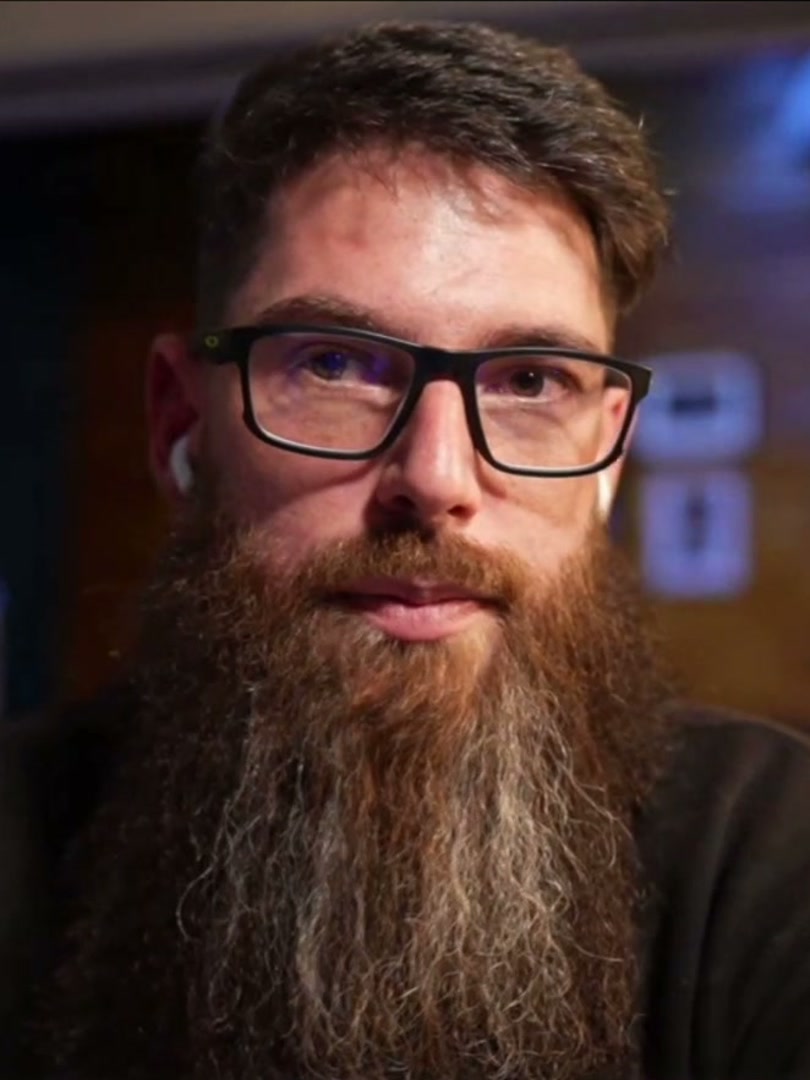
Arno Pretorius met theChurch.digital through its online Bible study groups about five years ago, when he was trying to understand how churches around the world were doing digital from a South African context where the technology is expensive. About seven years ago, while at a physical church, he felt God call him into digital ministry, and for the last two years he has been building Kingdom Spaces (kingdom.online), roughly 2,800 hours of it largely on his own. He compares it to Joseph and Noah, who both looked mad to the people around them while they prepared, and wonders aloud whether he is building a digital ark. Jeff's word to him, and to everyone in the network going through a hard season: you're not wrong, you're early.
The problem Arno set out to solve is not a lack of technology. Churches have good tools, but YouTube, WhatsApp, the app, the email list and the CRM each solve an operational problem, and the relational part falls between them. So the Sunday gathering and the week around it feel like different churches. His example is someone who has watched a church's YouTube thirty or fifty times and considers it his church: where is he connected, and who is discipling him? Kingdom Spaces tries to keep the notes, scripture, questions, reflection and prayer attached to the message and to the one church people already belong to, in the room and online. The feature churches underestimate most, he says, is notes: half or more of the room is already taking them, and anchoring them to the moment in the service gives both the in-person and the online listener something to come back to during the week.
Asked what success looks like, Arno declines to name a number of churches and names a shift instead: turning anonymous viewers into people who are known, and consumers into participants. He does have one number in mind, an estimate of 250,000 hours of church content on YouTube every Sunday, and says that if a tenth of those hours were spent on Kingdom Spaces he would be very happy, for the relationships and the disciples that would come out of them. He also makes the case that the church should own its own digital infrastructure rather than depend on free platforms owned by someone else, and that good digital accountability looks like a prayer team where correction can happen without breaking the relationship.
Late in the hour Jeff turns to small churches. A church he works with has around 250 people in the building on a Sunday and another 150 to 200 watching online, and the work now is finding out who those people are. If he led a church under a hundred, he says, he would double down on digital, because relationships are what small churches are good at. Arno's advice to a church whose stream ends with nothing after it is to decide what the stream is for, and his closing note is that digital has a big role to play in bridging the gap between Sundays.
Jeff Reed: All right, hey everybody, welcome to Becoming the Church Digital. Jeff here, founder of The Church Digital, and my settings all of a sudden just wigged out me right as I was about to get started. Has that ever happened? You know, you got everything done, your mic checks, everything should be set, and all of a sudden, like, it just all goes to pot. Well, that was literally my past, like, two minutes. And hey, it's great to be part...
Jeff Reed: of this show, The Church Digital. Excited to jump on this stream with you, and we've got a really interesting conversation I'm excited about with a guy that I've known for a while now, but that I reconnected with coming back to The Church Digital. I'm excited about where he's going with his organization, and we're going to talk about it and the implications. really for the global church in digital space. But before we get there, I wanted to give a heads up on a couple things. Next week, we're doing our town hall.
Jeff Reed: Every quarter, okay, we took some time off. I was sick, sorry. But every quarter, every three months or so, we basically do a town hall meeting, take some surveys, figure out where people are, gather together, and talk about really the next six months of ministry for the church digital. A lot of what we've done in the past, especially centered around the 1002 prayer movements, centered around the conferences, have come out of these town hall meetings. And we've got a town hall meeting coming up next week, Wednesday, October 8th. If you go to thechurch.digital.com, all one word, thechurch.digital.com.
Jeff Reed: It'll figure out the time for you and your time zone. It'll be 2 p.m. Eastern this time next week. But there's invites and more information at church.digital.com. We also want to hear from you in advance on some questions. We've got a survey out there right now, the church.digital.com survey, S-U-R-V-E-Y, survey, the church.digital.com survey. Fill that out.
Jeff Reed: I think we've had maybe... 30 plus people. I took a nap a couple hours ago. Actually, I'm not sure what's happened since then. But lots of interesting stats, even just coming out of the early aspects of the survey so far. I was meeting with leadership this morning, just going through some of that.
Jeff Reed: But some interesting tells coming out of the season that's helping us to prepare for how to do ministry in the months ahead. And, oh, so many other things. Just get in touch with The Church Digital. You know, we've got J. Moore, J. Moe, J. Moore. I don't know where that came from. Can't wait to see what Arno is cooking up.
Arno Pretorius: Hey Jeff, good to see you, eh?
Jeff Reed: Yeah, Arno, everybody, everybody, everybody. uh knows arno uh it's it's really fascinating to see uh dude lives on the other side of the planet yet somehow is really connected to to a lot of people in america and so no reason to just kind of like dance around it anymore let's go ahead and bring him in hey arno how are you doing man Good to see you as well.
Arno Pretorius: been a long time hmm
Jeff Reed: Yeah, well, I tell you, the first thing that I've missed about Arno is his beard. I mean, I met you during COVID, maybe, I guess it would be early COVID, probably, and the beard was just as beautiful then, man. um that is that is an envy i i can't i can't do it like i i just i i i can't get it anywhere near that long but uh man it's it's a it's a pleasure let's why don't you for obviously jason knows who you are jason's uh screaming uh he's uh gonna be in uh yeah okay so you're he's gonna be in uh new zealand next week
Arno Pretorius: Yeah. Oh, wow.
Jeff Reed: uh for for work so at least he's that's still not that near you in in south africa but at least it's oh you know what no it's new zealand afterwards i'm sorry i jumped into it he's gonna jason are you gonna be in south africa next week he is gonna be in africa somewhere in africa next week i forget the the country though
Arno Pretorius: Well, ZA is South Africa. I don't think it's New Zealand. I'm not sure.
Arno Pretorius: If he's going to be in Joburg, we must meet up because I'm in Joburg at the moment. I'm not in Cape Town with the holidays with the children. So maybe we meet up.
Jeff Reed: Yeah. So I'll keep an eye on the screen, see if he says anything back. You know, there's a delay of eight seconds, I think, so hopefully he responds. But you're right, he's going to be in Africa for a stretch, and then he's back here in America, and then he's going to New Zealand for work.
Arno Pretorius: Yeah.
Jeff Reed: after that dude you know talk about world traveled i'm actually doing he spoke at a missions conference here in america a couple weeks ago and i'm doing a stream with him tomorrow to talk about talk about that he did his platforms his places and so we're doing talk and so we're doing that as a stream tomorrow but let's talk about you man
Arno Pretorius: I'll definitely join in. Okay, let's do it.
Jeff Reed: Yeah. Let's talk about you. You have a rich history. Okay. Sorry, Jason. We'll do it one more time.
Jeff Reed: Dude, going to be in Johannesburg for a few days. We should meet up. Yeah, I'll let the two of you connect via WhatsApp. I'll get you guys connected for sure and let you guys go to town. That's going to be great. Talk to me a little bit.
Jeff Reed: Introduce yourself, man. Some people, if you're deep into church digital, you know Arno, but there's a lot of people that don't. So, man, tell us a little bit about yourself. Tell us your story.
Arno Pretorius: so i think what is interesting is i mean i met you guys or the church digital about five years ago um you guys started these online bible study groups and i remember joining you guys with that and at that time i was actually really getting into like understanding how churches around the world do digital and
Jeff Reed: Mm-hmm.
Arno Pretorius: at that time i was quite intrigued with how the american side of the world was doing it as i think it was kind of more how can you say, leaders in that space. And the world was like watching. So I was quite intrigued to see how it was happening, especially out of a South African context, because I think later on we might discuss this, but out of a South African point of view, the technology is expensive.
Jeff Reed: Mm hmm.
Arno Pretorius: So understanding how it was working was a big thing for me. And it's now, what, it's six years, five years later, and we are at the brink of, I think, one of the biggest changes that the church is seeing in the digital space. Not just because I think that's where we are at as an organization as well, but just because of AI and really what is happening in the digital space. I think... we are just before that like realization of the people that are too new to be understood kind of will be understood very soon and then people like ah this is what you've been doing the whole time like preparing for this that what that that is how i felt in covet because um about seven years ago god called me into digital ministry while i was at a physical church
Jeff Reed: Yeah.
Arno Pretorius: And at that time, I didn't understand exactly what he was asking of me to do and the sacrifices that he's asking me to make in this space. So looking back, it has been a God-led journey for the last seven years.
Jeff Reed: No, I remember early on you were working with, as I recall, a large established multi-site church. And you were feeling called away from that.
Arno Pretorius: Yeah.
Jeff Reed: It was interesting. I had the same story maybe eight or nine years ago.
Arno Pretorius: Yeah.
Jeff Reed: So I had just been similar, but felt called away, felt like God was leading away from that. And... You know, to be honest, I missed the steady paycheck. I've gone on record about that. There's some things I love about the embodied church and how it's operating.
Arno Pretorius: Yeah.
Jeff Reed: But truly, if I knew what God was asking me to give up, I don't know. if I really would have. We're going to get into something else, but maybe talk a little bit, what lessons have you learned in being obedient, in following God through this season away, creating your own thing, being a little visionary, apostolic a little bit, creating something different that the world doesn't even know they need yet.
Arno Pretorius: Yeah.
Jeff Reed: What has that experience been like for you?
Arno Pretorius: It's really difficult to sum it up into a short couple of sentences. it's tough it's it's tough it's it's not something for everybody um even though i have a couple of a couple of friends in in the the ministry as as individual ministries and not part of big groups of organizations so i had a little bit of help from them to like navigate the space of doing it alone but you still have to get up in the morning and like ask god am i still on track am i still doing what you're calling me to do so i kind of explain it to people which i meet or well sorry my afrikaans sometimes gets in my brain and then i have to translate it to english so just give me a moment but
Jeff Reed: Sure.
Arno Pretorius: sitting around a coffee table or drinking coffee with a friend and telling them how it feels it's like you know those times that you hear these testimonies of people that already went through this and then you're on the other side of it and then you're like but you have no idea what it is for me to go through this and then the only thing that I could hold on to is what God told me
Jeff Reed: Amen.
Arno Pretorius: and my conviction that what i heard is true and that's the only thing that could carry me and prayer is that the conviction that i have with what he said is true and that he's not going to fail me
Jeff Reed: Even just clinging to that, I know there's lots of people right now in the church digital network that are going through, it's a hard season of ministry right now. I'm not calling out individuals as much as the collective group is really struggling. And that's actually the thing that we're encouraging people. is just keep clinging to this, to the idea, to the remembrance that God's got you this far. He's not going to fail you.
Arno Pretorius: Amen.
Jeff Reed: Even in the midst of the difficulties that we're facing and across the board, it's different things.
Arno Pretorius: Yeah.
Jeff Reed: It's not one thing. But even in the midst of that, God's gotten you this far. You're not wrong, you're early. And we're going to talk some about that, where you're not wrong, you're early. But even in the midst of all that, God is walking with you step by step to get you through this. So let's dig into this.
Jeff Reed: You've been working on a project for a couple years now. Tell us a little bit here about what you've rolled out and what you've built over there in South Africa.
Arno Pretorius: So, the easiest way to explain it, is that we looked at... how a church functions on a regular week-to-week basis and most of the work goes into the sunday service that's where most of the people gather and then that flows into cell groups or small groups like groups and in some courses etc and we found that you could
Jeff Reed: Sure.
Arno Pretorius: replicate all of that in a digital space through some type of tool youtube or right now media or Oh, what's the other sub splash? That's for content distribution. And then there's some, I don't know, of good course material content. But then also you have some AI tools to cut everything down. And then you have your WhatsApp group.
Arno Pretorius: So everything is all over the place. So we then looked and tried to navigate or tried to work a path, like how do we replicate what we have in a physical space in a digital environment, a digital expression of church, so to call. And how do you bridge that space or that expression of church into a physical church? so that they are still one church just different expressions of that same church so i think what we came to realize is that as long as they are fragmented all of those engagement layers different platforms are fragmented they they kind of feel like different churches they don't feel like the same one And that's kind of what we try to solve, is how do we take all of that and bring them together as a bridge to the same physical church.
Jeff Reed: And so that's come together. Your software platform is Kingdom Spaces.
Arno Pretorius: Kingdom spaces, yeah.
Jeff Reed: So Kingdom Spaces, you can see it at kingdom.online. Is that the website, right? Kingdom.online?
Arno Pretorius: but online yes kingdom.online
Jeff Reed: Yeah. And so it's Kingdom.online. It's a new software platform that tries to connect together the physical expression and leading from that. Okay, you've got the stream. where you're reaching physical people, and you've got this stream that's online, but you're really trying to not have the two hemispheres. We all know this.
Jeff Reed: Anybody that's done digital ministry in context of a physical church,
Arno Pretorius: Hmm.
Jeff Reed: You know, you've got the online audience, you've got the physical audience, and it's very rare when they cross and when they, you know, engage. And now you're starting to create this platform, an all-in-one shop where you're bringing them together to create that experience. So you've got, you know, you and I have had conversations about this. You put in 2,800 hours, you know, on this project, mostly on your own, you know, praise God for AI. working through that.
Jeff Reed: Man, what's it like to develop something like that in isolation alone without anybody really using this project yet?
Arno Pretorius: Yet. I think yet is the important part there, as I believe we are at the brink of a really big onboarding. I really have high expectations for what the Lord is starting to do in this space and the amount of people that is connecting around us. So to answer your question, I think it comes back to the calling that God has placed on my life. um it is to really pioneer digital kingdom and a lot of times when you pioneer you you are ahead of everybody else you you're walking the road which nobody else is taking so i feel very comfortable in that in that sense because
Arno Pretorius: I know that is what the calling is on my life. So walking alone, walking this road and leading where others will follow is kind of the purpose of doing it to this point.
Jeff Reed: Yeah.
Arno Pretorius: But there should become a time where I take the people with me. So we are entering in that stage now. And I believe that I have
Arno Pretorius: fulfilled my faithfulness and persevering through doing this alone. But it wasn't easy, that I can tell you. And I was talking to some friends in the week now, and this thought came to mind that I think when Joseph was preparing for the drought of seven years, he was doing something that everybody thought he's crazy for seven years. um but god asked him to do that and the same thing with noah so now i built knock people thought he was mad so maybe i'm building a digital arc i don't know
Jeff Reed: That's awesome. And we're all building digital arcs in the world. Things were nuts. I love that. Well, you know, let's dig in and actually talk about the arc itself, so to speak. Where'd you find that?
Jeff Reed: No, I'm kidding. What did you find like churches were actually lacking? So you've got some physical experience with churches in South Africa. You felt called to digital.
Jeff Reed: What's the hole? What's the void that your software is really trying to address that this platform's solving?
Arno Pretorius: Well, yeah, I think it's not a lack of technology because I think churches have great technology. I do think, though, that churches... not all the technology is connected in in a sense to to to bridge the gap
Jeff Reed: Hmm.
Arno Pretorius: of of unifying the engagement between them so i mean it's all over the place you have youtube whatsapp facebook email the app the crm all of those things they they exist and there's a lot of them that actually is great i mean there's brilliant software out there The only problem sometimes, I think, is do they all feel like the same church? Do they feel like the same expression of church? Or is it solving an operational problem? So I think not a lot of them actually solve the engagement part, meaning the relational part of church. So we can become very good at solving the operational side and everything is running.
Arno Pretorius: It's like coming in on a Sunday morning and pressing a single button and the whole technology stack just lights up.
Jeff Reed: Mm-hmm.
Arno Pretorius: It's easy. So I think some of the technology or some of the softwares solve that problem of bulk communication. But how does that tie back into the relational part? How does the person respond? Where does it land? To who is it connected to?
Arno Pretorius: How do you distribute the responsibilities within your organizational digitally in a relational sense? So how do you give access to everybody on YouTube? How do you manage that access? How do you comment on those things? So I think the biggest lack in this space is keeping accountability and knowing who is responsible for what part of the relationships and how those relationships come together. Like for argument's sake, you can have somebody watching your YouTube like 30, 50 times and...
Jeff Reed: Sure.
Arno Pretorius: He considers himself a part of your ministry, a part of your church. But where is he connected to? Where is his relationship coming from?
Jeff Reed: Yeah.
Arno Pretorius: Who's discipling him in that space? And I think that's where I believe it's lacking. It's an oversight of how that relational side looks.
Jeff Reed: Yeah, and that relationship is key in physical relationships, and there's a drive for physical churches to have those relationships, whether it's small group or, you know, some sort of, whatever the discipleship structure is, churches are leaning that way. And what's interesting is in some of my new work now, I've really started been challenging churches, started been, that's not good English, but I've been challenging these churches, physical churches, on thinking through how digital can strengthen the physical relationships, which I know is crucial to what you're seeing and what you're doing.
Arno Pretorius: Sounds like mine.
Jeff Reed: What are some opportunities that you're seeing where you look at physical churches, they're broadcasting church on Sunday digitally.
Arno Pretorius: Yeah.
Jeff Reed: I mean, the majority of churches, if not all churches at this point, are doing that or know how to do that. but there's a gap from Sunday to the next Sunday where that relationship, where that community ends. Where are you seeing that in churches today?
Arno Pretorius: Well, I think something that, well, I think the title of this stream is... the stream ends then what so i i guess that proves the point so what happens after the stream ends so if you look at a physical church you have your conversations around the entrance hall you you have your volunteer teams serving and they are having conversations you have the pair afterwards
Jeff Reed: Hmm.
Arno Pretorius: There's the shared life in the communities where families start making connections and they do life together. and we don't have a a suitable equivalent unless you you you really have a mandate for this stuff then you can find tools to to help you navigate that i mean we saw during covert how zoom helps us do small groups during the week
Jeff Reed: Yeah.
Arno Pretorius: But again, that's another tool that you have to start implementing in your technology stack. You have to admin it. So if you want to really continue the conversations, the relationships after the gathering, We have to find a way to easily integrate that into our daily lives. So finding ways where we already communicate or places where we already are, like WhatsApp or we're already on our phones. If we have an opportunity to read the daily devotion from the Sunday service, it's automatically sent to you.
Arno Pretorius: You can engage with the message again.
Jeff Reed: Mm hmm.
Arno Pretorius: and that maybe prompts you to actually send a prayer request now that prayer request gets locked and it's sent to the prayer team and the prayer team can engage back with you and this is also how i believe this can help physical churches take the message throughout the week and get more connected but at the same time it helps the people that are not part of the physical church be connected to the physical church in a digital sense because now there's a relationship that can be formed throughout these touch points after the service but you can't have you can't do it if it doesn't exist
Jeff Reed: Yeah. And so, I mean, you're talking about daily devotionals. You've got an opportunity for notes, for scripture highlights, for questions, reflections, digital prayer. Of those, what do you think churches today underestimate the most?
Arno Pretorius: It would be definitely the note system. I think I found myself regularly sitting in church, and then I would look around me, like, what is the people doing? And I would say about 50% to 60% of them are taking notes of some sort, either on a notepad or on their phones.
Jeff Reed: Mm-hmm.
Arno Pretorius: And I believe if we can just... unify the place where they take their notes we have an incredible advantage of understanding and and and and bringing that reflections from the message into the week so they're already doing notes i mean we don't have to change the behavior we're just asking them to do it on a different place so if we can take the the notes function just as an example
Jeff Reed: Sure.
Arno Pretorius: what what we are proposing or or what what is built currently is you can take on the app the live note you can take notes in a live service which is being recorded or streamed and those notes are anchored to the exact moment in the service so during the week
Jeff Reed: Sure.
Arno Pretorius: you can actually go and re-listen or reflect back on the service that happened. So now you're giving the in-person, the in-service person, an opportunity to engage in a digital space. The same place where the guy online would be engaging. That note structure also allows you to import your Bible verses. And if the church is... tech savvy enough or really into this they can actually send the scriptures straight to the person's phone and everybody gets the scripture instantly they open it so it's a much more connected experience i believe if you do it right so that's why i would say notes
Jeff Reed: Beautiful. So you've got this Kingdom Spaces. It's at kingdom.online is the website. You've been working on this for a couple years. How many churches are using it? How many organizations, ministries?
Jeff Reed: What does this actually look like? How many people are in your ecosystem? Ministries are in your ecosystem.
Arno Pretorius: This is an interesting question, and I think you're not the first person to ask me this, let me say that.
Jeff Reed: Mm hmm.
Arno Pretorius: And the bigger problem that I see with this question is that when I explain this to the end user, I've demoed this product quite a lot in the last four months. Every single person that I show this to is not necessarily the person that needs to make the decision from a church perspective. And the instant reaction that I get is, this is incredible. I would love to use this. It would help me reflect better on messages or videos.
Arno Pretorius: And some of the ministries i've showed this to is they they are also very keen to start using it but unfortunately it is it's a new concept to to understand and this this makes it hard to change the ways of the church so i think there's a couple of places which we could do better to make sure that the churches understand it better
Jeff Reed: Yeah.
Arno Pretorius: um but overall i would say we don't have enough data to to say exactly who is picking this up or not because currently i'm working with alternative ministries i'm working with churches i'm working with worship groups and all of them have different needs and this is shaping the the platform to be
Jeff Reed: Yeah.
Arno Pretorius: kind of so versatile that any any type of ministry could get on it if you are just preaching anywhere on a sunday i i tend it with ministry this would also help you because you could connect with more people around you they can follow your ministry if you're a church it can be a complete digital expression of your church and also be a great addition to the people that's in the room because of the engagement tools that's built into it.
Jeff Reed: So let me ask, you're creating a project. Once again, you're not wrong, you're early. And it's hard to get, I mean, we're both innovators. We're both disruptors. We both work with churches dealing with technology and they don't like change. Churches by a design don't like change.
Jeff Reed: And we're change innovators for a industry, for the church space that is wired to not like change.
Arno Pretorius: um um um
Jeff Reed: What do you do when it's a bad day? Who do you talk to, a wife, a board member? What is the, ecosystem may not be the right word, what's the support system around you when you do have a bad day? We all have bad days. What do you do on a bad day?
Arno Pretorius: well my wife is there for me at least so i can complain with her that people are not listening but ultimately there's a there's a couple of people around me that i trust and that i can share my feelings with but i also think that it's important that i sit with god about what I'm building, what I'm doing, why I'm doing this. And something interesting actually happened. I wrote the book because, yes, I wrote a book because I was struggling to deal with this feeling of insignificance.
Jeff Reed: I didn't know that you wrote a book. Awesome.
Arno Pretorius: i guess because your question kind of comes to comes to that it is well what is happening why is it happening and why do we go through things and why why do we get bad days um and the the the title is formed by something it's not published yet so i'm still working that out but in any case and and the question goes
Jeff Reed: Mm-hmm.
Arno Pretorius: really about okay so if if i have a bad day what is it shaping me into what what should be the outcome of of of this process and interesting enough the the whole platform idea the whole digital spaces it it also is is quite quite interesting to understand that what what i'm busy preparing what i'm building will ultimately shape thousands of lives once it is adopted and what do i want those lives to be shaped into so when they have a bad day like i have how do they connect to a support group
Jeff Reed: Mm-hmm.
Arno Pretorius: What support group do they have around them? So if we are only in a digital space, if we are trapped in only digital spaces, we don't have that support group around us. I mean, we can't turn to AI. That's not an ideal conversation to have with an AI. um but anchoring it a little bit more back into like physical relationships i have my wife i talk to her about bad days and people that annoy me and stuff that's not working and platforms that's not working or code that's not doing what it's supposed to do and I have a couple of good software friends and the structure of our company is also a non-profit so the other directors with me in the company is also very experienced software engineers
Jeff Reed: Yeah.
Arno Pretorius: so if it's a if it's a bad day regarding some code i at least have a couple of people that i can reach out to but and also luckily if it's spiritually i also have a lot of pastor friends which i can call the only problem is they are sometimes so busy it's like try to call them like yeah you can't talk now just i'll call you back tomorrow and then you're alone at it again pioneering in a space which nobody wants to listen sometimes.
Jeff Reed: How many, it's interesting. I had a conversation today in leadership and we were rolling out some software with the Church Digital next week. And one of the, Anesh on our leadership team, he's actually been getting to know one of my AI agents really well because they just do emails and things like that. How many different AI agents do you have? I'm just curious. Are you using a lot of AI to build this?
Jeff Reed: Are you writing it by hand, mixed? What does this look like for you with Kingdom Spaces?
Arno Pretorius: I think this is a very interesting topic. Just before this conversation, I was speaking to a friend regarding this AI agent that you have that I was talking to set up all this meeting.
Jeff Reed: Yeah, Baruch in this situation. I've got about 25, but go ahead, please. Mm-hmm.
Arno Pretorius: and uh i i honestly i don't want to have so many i i'm still on the fence to be honest about this whole ai thing even though i i am probably a more ai user than most of the people in my sphere i i do i do treat it with high caution so um in in in this environment where we allow agents to code and so on i am very strict with the rules that we use and it's just assistive agentic coding and not full architectural concepts and all of that stuff so i think to answer the question only three i have three agents
Jeff Reed: mm-hmm mm-hmm okay
Arno Pretorius: and they and they are scattered across um three different or three different um in this well what do you what do you call them companies i guess so anthropic um gpt open ai and then i have a offline version which is running q and 3.8 yeah which i'm testing a couple of
Jeff Reed: Yeah. Yeah.
Arno Pretorius: um how can you call it custom trained, very strictly controlled with huge sets of rules, custom graph requests to understand the space that we are in, to assist with a couple of tasks without allowing the bigger frontier models hallucination problems to creep in. So yeah, only three.
Jeff Reed: Talk a little bit. It's interesting. Like I said, I've got 25. That may not be an exaggeration. With all the different client work and things like that I do at this point, I've tried to scale down.
Jeff Reed: Things seem to go quicker. It's funny, I don't have a team. Well, I have a team, but in the consulting work, it's mostly AI that does all the coding and the working.
Jeff Reed: And I'm always quick to claim, I don't actually know what I'm doing with AI. And so I'm like, don't do this because I'm doing it, because I'm not the AI expert.
Arno Pretorius: um um
Jeff Reed: But I have really enjoyed having an AI team team that's actually producing and doing the work. It's let me be much more imaginative, I think is what I would say. is that, you know, my, man, I'm probably speaking out of turn, but good ideas have died historically. Trying to get, like, and even some of the stuff you're working with now, trying to get, and this is some of the tension just in the world that I've lived in. trying to get churches, pastors with a lack of vision to understand, to buy into, to give permission.
Jeff Reed: It's been hard historically over the years for me. And really coming back, it's been a little bit of a... a rejuvenation, maybe like a renaissance era where it's like, oh my gosh, I can do this.
Arno Pretorius: hmm hmm
Jeff Reed: And I've got, you know, Claude that's going to do most of the heavy lifting for me. And I can be visionary and I've got execution covered. You know, it's been really, really interesting.
Jeff Reed: you know, I'm intrigued. Jason, JMO, actually this morning, I was showing him some of the software that I've been working on. And he's like, are you like just building exclusively web software now? Is this what you do? There's a lot. I've been burning the midnight oil.
Arno Pretorius: Yeah.
Jeff Reed: I literally pulled a couple all-nighters. And I was like, no, no, no, it's not that bad. But we're, you know, we're modeling. And in essence, what you're doing right now, And even just to encourage you, I mean, if you get 50 churches on this thing, if you get 100 churches, if you get 1,000 churches, I don't know what success is for you. That might be an interesting question.
Jeff Reed: But the fact that you're modeling... a healthy physical digital relation, embracing digital community for a physical digital relationship, that you're trying to create digital tools that will help physical church, that will help physical discipleship be better through reinforcing digital tools to make physical discipleship better.
Arno Pretorius: Hmm.
Jeff Reed: That's an incredible challenge. And being an early adopter and innovator in this space, excuse me, a pioneer in this space, not a lot of people would go into it.
Arno Pretorius: It is.
Jeff Reed: Not a lot have succeeded.
Arno Pretorius: Hmm.
Jeff Reed: I don't think anybody succeeded because once again, you know, we may have survived COVID, but it still is early.
Arno Pretorius: Hmm.
Jeff Reed: What is, this is off topic maybe, but what is success for you as an entrepreneur, somebody starting their own business, investing 2,800 hours, you told me, two years worth of work, like what's the end game? What's the finish line for you?
Arno Pretorius: I would say that if I can get I don't want to put a number to it, but if I can get churches to adopt a better balance in terms of the relationships that they can foster. Foster is not the right word, nurture is the right word.
Jeff Reed: nurture. Good word.
Arno Pretorius: Nurture relationships. in a digital space. As the world is increasingly growing in digital communities, it is easy to hide behind your screen. It's easy to hide behind an anonymous ID.
Arno Pretorius: I would say success is if we can convert those anonymous people into people that are known. People that when you jump on a call like we are now, hey, how's it going with your family? You see, there's authentic relationship between two people in a digital space.
Arno Pretorius: And I think the technology that the world is pushing is increasingly pushing us to be consumers in this space and not participants. So even if it's a number of churches that are utilizing the software or utilizing the platform and really discipling people in a digital space with authentic relationships,
Jeff Reed: Mm hmm.
Arno Pretorius: where discipleship can happen, I would say that is success. Like I said, I don't want to put a number to it, but if I can keep advocating for that and keep creating the tools to help bring that to the table, then I believe we are achieving what we are set out to do.
Jeff Reed: Yeah.
Arno Pretorius: I think then out of a marketing perspective or a use case perspective of people actually using the software, that I think would require a different question or a different benchmark. As I think something, while preparing just this conversation, is a lot of metrics that we as church has put out there.
Jeff Reed: Yeah.
Arno Pretorius: to identify how good we are doing is based on the wrong things. So if what we are building is completely opposite to that, I guess we'll be slow adopters for a number of years until people realize like, hey, we are heading off a cliff here.
Jeff Reed: Hmm.
Arno Pretorius: We need something different. Then we'll be there.
Jeff Reed: Yeah. Yeah, I'm glad you said that. In digital, there's certainly vanity metrics. And so, you know, it's interesting as you were talking about not being defined by numbers. In my mind, just the entrepreneurial business mind that I'm at, I'm like, oh, I can't. I have to have numbers.
Jeff Reed: I have to have goals. I have to. But that's... Just to be honest, that's my bringing up. That's my parents 40 years ago, 50 years ago, how they raised me. And my default is some of those metrics.
Jeff Reed: But it's, you know, to your point, it's a crockpot. It's not a microwave. Stuff takes time. And, you know, the thing that I'm working on now is just being... Being that dependent on God and letting him define success when things, you know, aren't success definable.
Arno Pretorius: um um
Jeff Reed: You know, dependent on the hat I wear or the glasses I wear, the lens I look through on the church digital, it could be a huge success or it could be a huge failure. Ministry-wise, when we look at lives impacted and presence digitally and how we're discipling the disciplers and equipping the equippers that are out there, huge success. Network 10,000 plus communities are thriving, multiple communities rolling out new things. And so, I mean, I'm very excited about what we're seeing on a global footprint with what we're up to. Um, the unfortunate reality is, is that oftentimes, you know, success is based on, on dollar figures and our operating budget is nothing.
Arno Pretorius: Yeah.
Jeff Reed: I mean, I, I don't want to say zero cause it's not, it's not zero, but it's not much more than zero.
Arno Pretorius: Yeah.
Jeff Reed: And, and, and as, as a result of that, you know, when, when I sit around talking with other nonprofits and they're like, oh, we have this, we have this, we have this.
Arno Pretorius: Yeah.
Jeff Reed: And it's like, well, I don't, I don't, I don't match up to that. And so it's very easy to define success based on what other people, in the box that other people are putting on you. I think it's very wise of you to take that posture of, hey, you know, we're just, you know, we're not going to do that. We're not going to put numbers on it and wait and see what God brings. Is that a...
Jeff Reed: Is that like a South African culture? Do you see a lot of other churches or ministries in South Africa thinking that way? Is that something that's more you? I'm just curious on that.
Arno Pretorius: I don't have a solid answer for you on that. And I think... I think it's something unique to me at the moment and where I'm going through. As you were talking about the numbers again, before I get to the unique South African perspective, I do think that there's numbers that I have in mind.
Jeff Reed: Sure.
Arno Pretorius: So you say we reach... You know what? Let me give you real numbers. I was actually looking at this the other day. Do you have an idea of how many hours does YouTube accumulate on an average Sunday just in church services?
Jeff Reed: No, that actually would be a fascinating number. You tell me.
Arno Pretorius: So there's an estimate of 250,000 hours of raw church content generated every single Sunday.
Jeff Reed: That's incredible. So four Sundays a month, it'll be a million.
Arno Pretorius: Each Sunday, 250. Yes.
Jeff Reed: Wow.
Arno Pretorius: So if we look at that numbers, if Kingdom Spaces can take a 10% of that, I would be happy.
Jeff Reed: Yeah. Wow. Well, God bless you in that.
Arno Pretorius: I would be happy, very happy about that.
Jeff Reed: That's a bold number right there.
Arno Pretorius: I mean, if you think about it, if we can get 10% of that hours spent on Kingdom Spaces, how many lives, how many relationships would be generated out of that context? How many disciples would be generated?
Jeff Reed: Yeah.
Arno Pretorius: How many consumers would be converted into participants? that that's that's the numbers which i would chase is i would i would chase percentages of what the world is currently putting out there but uh yeah
Jeff Reed: Well, and your platform is wired in activity versus consumerism. Like YouTube, you're sitting around, you got 250,000 hours of content that's being consumed. People are sitting in a chair, staring at their phone or staring at their monitor or laptop or TV or something. They're not active, it's passive.
Jeff Reed: your platform with some with the community features and the engagement features you're dialoguing your your discipleship you're in relationship you're in community which is going to foster not a consumeristic mindset but one of more of a discipleship
Arno Pretorius: Yeah. Yeah.
Jeff Reed: either a precursor or the thing itself. Like that's a phenomenal challenge. So if you could get 10%, heck, if you could get 1% and start with that and then grow, like that's a phenomenal opportunity right there.
Jeff Reed: I love that.
Arno Pretorius: Well, let me add something else to that idea. And we didn't discuss this beforehand. But think about it this way, that if you think about the spaces where church actually participate or belong digitally, most of those platforms are free stuff that is owned by some big tech company in a world view or a world sense. The church doesn't own that technology. So I think that the start of what we are building or the start of Kingdom Spaces is to generate the need to understand what it is that we want to build as a kingdom or as a kingdom mindset company about what it is the church needs to present in a digital space.
Jeff Reed: Hmm.
Arno Pretorius: and then give the opportunity for churches to actually own that technology so if we want to look ahead 10 20 years from now and we don't want to be controlled by a youtube or facebook or something like that we have to have equivalent place to have these things so we are saying that we want to build the technology or build the infrastructure for the church to actually own their own technology in this space so that we can be digitally present equivalent to a youtube or equivalent to a whatsapp or facebook or whatever so that you can still be in that space so i think that's the larger vision
Jeff Reed: Yeah. Yeah, it's... it's a fine line and it's one, you know, we don't talk about in the church a lot today is owning your platform. But we are, I mean, we're a bad hate crime, you know, especially in America with some of the tensions that we're facing. We're a bad hate crime away from, you know, just being completely ostracized and isolated away and not having access. to some of these platforms that we have that's currently free.
Arno Pretorius: Hmm.
Jeff Reed: And as technology, not understanding it, that's very true. There are Christian tech companies right now that are fearful of that. And I know at a personal level, we lean very strongly on YouTube and on the free platforms. The flip side is that, you know, if you, when we've done stuff away from the YouTubes, the WhatsApps, the Discords, when you create your own, you've got to have, and this is why I love your platform, your software. Because you've got to have engagement so attractive that it pulls people to that platform where your community is.
Arno Pretorius: Yes.
Jeff Reed: And that's the thing, to be honest. I wouldn't call them a competitor, but some of the other software platforms that have tried to do what you do, they really didn't have the luster, the power, the feature set. And to be honest, this is an interesting question. You know, I would say churches didn't know how to use it. You know, there's a church that uses here in America. It's a large church.
Jeff Reed: You know, they use a competitor platform for engagement during the week. And I was like, well, do you guys ever like jump on during the week and do like a midstream or do you ever do open offices? And no.
Jeff Reed: They don't engage. They just open it up like it's a private Facebook group and people talk to each other. But the pastors and staff aren't creating community opportunity announcements. They're just wanting people to post funny memes and talk about things in there without really being involved.
Arno Pretorius: Yeah.
Jeff Reed: How much do you... coach? Do you find that, that churches don't understand how to use the powers that you're giving them? Do you have to guide them maybe a little bit in the beginning? What's that process look like? Are they receptive to it?
Arno Pretorius: I think that's where we are at the moment is we find that there's a lot more teaching and involvement needed to understand what we are proposing. Because what you just said is completely true. But I also do think that the other challenge that I saw with a lot of these other platforms is that it's not easy enough to delegate authority.
Arno Pretorius: Somebody once told me that the easiest way for you to make it accessible or make it easier for other people to understand or do things is to give them the control.
Jeff Reed: Mm-hmm.
Arno Pretorius: give them not the responsibility, but the freedom to choose what they want to do so that they can be accountable for that. I can't remember exactly the wording of it, but it comes down to let them be, give them access to whatever they want, and... they can decide how it should work so that means that leadership of a church should be able to give control to the teams and the team leaders to start stewarding and creating these things but you have to have some type of accountability linked to that and a lot of the other tools that i saw doesn't fully encompass that in such a way that you could release your leaders to actually champion something so that your your staff still needs to be so tightly involved with it it just falls flat it's too much control okay
Jeff Reed: Yeah. Yeah. You've said this word accountability. You've said this word accountability a couple times. I just, I want to poke the bear on it. Unpack for me.
Jeff Reed: So the church and accountability is an interesting conversation with me because I don't feel like the church actually, at least the American church, I don't know that we hold people accountable for what God is leading them to do. And so I'm actually curious, when you're saying accountable, what do you mean when you say that? What does that look like for you in this context?
Arno Pretorius: So I would say, if you, let's use a prayer team as an example. So you have your Sunday gathering, and you have a team of people, that you trust that you allow to pray for other people in your congregation there is a certain level of accountability that you put on that team member to carry the the vision the value and the the beliefs and the teachings that you teach in your congregation and
Jeff Reed: Mm-hmm.
Arno Pretorius: Once something happens or they step out of those boundaries, there needs to be accountability towards it, meaning that there's a relationship in that team so that there could come correction.
Jeff Reed: Mm-hmm .
Arno Pretorius: Somebody can correct them without ruining or without damaging the relationship. I believe that is good accountability. And if a one-on-one conversation doesn't help, somebody else within the circle can be involved so that the correct behavior or the correct steps should be taken. That is what I believe accountability is in a church sense. So if we talk about digital accountability, you need to have tools in place to facilitate that process or to go back to and see, okay, this is what happened.
Arno Pretorius: this is what we need to do to to restore that and yeah i hope that does that answer the question hmm
Jeff Reed: No, it does. But what's interesting there is you're talking about an iteration where you see something, okay, this works, this doesn't work. And the goal with the accountability you're describing is learning from the mistakes and cycling through and trying again towards that. Oftentimes in America, once again, I can just speak from my own backyard. We don't see churches iterate. It's fail and never do it again.
Jeff Reed: And it's just kind of wipe it off.
Arno Pretorius: Thank you.
Jeff Reed: And no, it doesn't work that way without that iteration, without that learning process. What have you seen churches try in digital space, in digital community, with Kingdom Online, Kingdom Spaces? What have you seen churches try that just didn't work? What's some learnings that you've picked up personally by watching people utilize your tool?
Arno Pretorius: I can't completely say that I've seen what works and what doesn't work, especially using the tools that we've created. I believe we created the tools out of the things that we saw didn't work with other tools or with other systems. And I think it comes back to what we said earlier is that there is this.
Arno Pretorius: thing about having so many different places to go to i i think uh pro church tools bradley he he calls it chaos score right the the amount of places where you have to go to communicate to your church or to find things that that you are trying to communicate and i believe our digital spaces are kind of the same because you go here for the app
Jeff Reed: Sure.
Arno Pretorius: You can't do everything on the app. Then you go here to do live groups in a Zoom call. And then you go to the website to find service times or event notifications. And then you go to the front desk to find out where to drop off whatever social event or what's the word I'm looking for?
Arno Pretorius: Humanitarian drive or something like that.
Jeff Reed: Sure.
Arno Pretorius: outreach. So everything is fragmented. So I believe that is what is not working.
Arno Pretorius: We shouldn't have five different places for a person to be involved in a digital church expression.
Jeff Reed: It's not, well, there's probably a lack of vision towards what digital can do to even get to the point of not bringing it together or not seeing value in bringing it together. It's an afterthought five different times. And so it's like, oh, it doesn't matter. Just, yeah, we'll have that and do that and do that rather than something that's more cohesive.
Arno Pretorius: Most churches, I believe, I think after COVID, they realized that digital can work, but it's not all of it. We have to have physical church, right? So most people went back to physical church. and just left the digital space hanging and then as we progress the last five years i think you guys mentioned it a lot i mean there's so much value still in the digital space i think the question is just how do we take what is digital and and bring it back to a physical church how do we bridge those two
Jeff Reed: Yeah. And it is interesting. There are churches that are, at least in my experience, there are churches, more churches today that are hungry for that answer than there were pre-COVID.
Arno Pretorius: um um
Jeff Reed: There are churches that want to know how digital can make physical better. how digital can be a tool that can empower physical. The past five or seven years has swayed enough physical churches towards digital. They see the power of it, that there is a decent amount of churches that want to know that answer. They may not like your answer, but they are at least asking the question at this point.
Jeff Reed: You know, if a pastor, so the show is when the stream ends, then what? If somebody is using your software, if they're not using your software, you know, either way, lots of people are listening to this. What is the...
Jeff Reed: What's some best practices? What's some advice? What's the first thing that you would tell them to do? They've got the stream. They've got the service. And then what is the next thing that they should be doing?
Arno Pretorius: Well, this might be a little bit harsh if I say it plainly. The first thing... um a little bit more tactical would be to ask what what's their the goal what is the purpose for them to actually have the live stream that would be my first question is what is the purpose for your live stream is it a missional reach is it to to get people outside your geographical area to listen in is it accessibility Is it teaching distribution? And depending on that answer, the next follow-up statement or question might not be related to you. But if you don't have a clear purpose for your live stream, I would say stop.
Jeff Reed: Mm-hmm.
Arno Pretorius: Just don't do it. Don't live stream because the amount of pressure you're putting your volunteers under, the quality of which you're doing it at is just not ideal. So if you do not have a good goal in mind for building that community and also giving them a place to belong within that community, then the best would be to not rather live stream. Maybe just upload it at a later stage for distribution or a content library. And even if that is the case, I think Kingdom Spaces actually is perfect for that type of scenario as well because it has such a great tool to build those libraries and categorize them.
Arno Pretorius: and help people find what they want or what they need within the context of your teaching and with your content. So yeah, does that answer your question?
Jeff Reed: I think so. No, it's interesting. You pivoted a little bit towards just this thought. I'm listening to you. By the way, if you don't have a purpose on streaming, don't stream. I've said that for years.
Jeff Reed: But that being said...
Arno Pretorius: Please speak.
Jeff Reed: I love a small church that leans in. As a matter of fact, right now I'm working with, I'm going to brag here for a second, I'm sorry. But I work with a church. There are about 250 people on a Sunday. And so 250 people are here in that sermon Sunday morning in the building. and online through YouTube, through the tools and the things that we're getting, there's probably another 150 to 200 that are here in that sermon as well.
Jeff Reed: And so online engagement is almost nearly as much as physical engagement. And what an incredible opportunity for churches to... to, I mean, literally multiply what their reach is. And it's funny, now that this church has this, I've been able to develop this for this church over the past year. All right, it's time to figure out who those people are. How do we do that?
Jeff Reed: And that's where, you know, okay, once again, the stream ends. I got 200 people on the hook that are watching this thing. Who are they? And that's now what I'm working with the church on, starting to discover that. And using engagement tools like what you're describing and what your platform offers is an immense opportunity to build those relationships and establish trust. If I was a church plant...
Jeff Reed: If I was a small church, if I was a sub-100 church, I honestly, I would double down on digital. And I would put far more energy into digital than a megachurch would. I just, I think, because what is small churches really good at? Small churches, hopefully, are really good at relationships. You're not a number.
Arno Pretorius: Yeah.
Jeff Reed: You're attending. You're a name. People know who you are when you walk in that room.
Arno Pretorius: Yeah.
Jeff Reed: They know your story. They're engaging. And if a small church can just figure out how to port that over to digital using tools like what Arno is talking about here today.
Arno Pretorius: Yeah.
Jeff Reed: Man, this is an incredible opportunity for churches to engage a different audience and develop ministry in a new way. Now, the majority of small churches do want to see their vanity metric is churches in the building, people in the building, and you can certainly drive digital to get people in the building. You can do that, and it is effective.
Arno Pretorius: Yeah.
Jeff Reed: And the church that I'm working with, one of the churches I'm working with now, that's the deal.
Arno Pretorius: Mm.
Jeff Reed: He's like, hey, in another year, we're going to figure out how to do disciple people only in digital space.
Arno Pretorius: Mm.
Jeff Reed: But right now we want to use digital to get people in the building. And so we're crafting campaigns, ad campaigns, developing tools to build that trust, establish relationship, and route people into the building.
Arno Pretorius: Mm.
Jeff Reed: The mobile app is a big for us, is the big tool. platforms like yours that create community would be very effective as well too because then that community is where you're developing that that trust piece so man i i love i love the stuff that that you're you're talking about here um when you got started doing this
Arno Pretorius: Yeah. Yeah.
Jeff Reed: Two years ago, how many different times did the idea change or evolve? Was the end game where you are two years today? Two years ago, did you know this is where you were going or did the idea shift around?
Arno Pretorius: Well, I would actually say it's about seven years that the idea is brewing.
Jeff Reed: Okay.
Arno Pretorius: The idea didn't change. And I love what you're saying about how small churches can actually better utilize this type of tool than larger, bigger congregations. And this is one of the reasons why I wanted to be free, because those smaller churches might not have the budget or the capital to build these types of environments like the bigger congregations can.
Jeff Reed: Yeah.
Arno Pretorius: So I think in terms of the idea or where we landed is a fraction of the original idea. because of the the need that i saw so as we were developing as this journey went along i think where king spaces as a product currently sits is slightly more on the engagement side than what i would have liked it to be um just because i believe this would be the largest section of where i think churches would adopt it this is the biggest need that i see within the current church community as a digital tool and that definitely slightly shifted in in terms of what was built versus the bigger vision the bigger vision is much more integrated integrated and
Jeff Reed: Yeah.
Arno Pretorius: far beyond something that i can kind of explain to somebody unless they see it and i think that is what helped us a lot as well because the the vision and the idea that god has given me is is very difficult to explain unless you have two three hours in conversation or just a quick hey this is this is this is the platform this is what you can do this is what i'm i'm seeing churches should do digitally.
Jeff Reed: Yeah, I feel that.
Arno Pretorius: And now everybody is like, hey, now I understand. No problem.
Jeff Reed: So good. We got a couple comments. It's funny, I actually had the chat window blocked, so I didn't see. Methos and others had been actually chiming in some good comments. I apologize. Methos just shared this.
Jeff Reed: I look forward to the day when a physical church has their stream live chat projected on the sanctuary wall during the service, and the pastor acknowledges what's going on in chat. You know, it's interesting. I'm not going to put Arno on the spot. Arno's actually not that far away from that, technically. I don't know if he would do it. Because if he's tracking notes based on time code, then chat based on the same time code probably is not that far away from a technical standpoint.
Jeff Reed: No pressure, of course, on that. And then, do you think that idea would work?
Arno Pretorius: It does exist.
Jeff Reed: Do you think putting, I'm sorry, I'll come back to you. Putting chat, what's your thoughts on, are you taking a photo of the chat right now?
Arno Pretorius: No, let me let me I want to show you something quickly.
Jeff Reed: Okay, all right.
Arno Pretorius: If we if we if you allow me, let me just switch this thing. Why? There we go.
Arno Pretorius: okay it's not uh it's not loading but so in the app we we have a uh why is it not focusing let me put it there in the app when you when you take the notes there's there's a there's a chat function meaning that the people that is in the room and people online that will be in the room will be will be having the same chat meaning that
Jeff Reed: Mm-hmm. There you go. Uh-huh.
Jeff Reed: Her chatting together. Yes.
Arno Pretorius: the people in the room, not necessarily the pastor might acknowledge them, but because I'm saying we need to bridge the two, so the people inside the room will be able to engage with the people in the online chat as well.
Jeff Reed: Yeah. Yeah.
Arno Pretorius: And I think that is where the communities would work.
Jeff Reed: Yeah. I mean, I'll back that. I will. I've said that for years. I never understood why some of the other solutions, like if you could bring chat to people in the room where they could asynchronously text each other, I think that's a huge win.
Arno Pretorius: you
Jeff Reed: Methos agrees. Methos is a... He's a Twitch guy, so he's wanting the boom, boom, boom, boom, boom chat, Twitch chat. I like that in the room and outside the room, but I still want my pastor tied into the booth. And I think that would, if I was communicating on a regular basis, I would be that guy. Just because I'm wired that way to tie into people with the chat.
Jeff Reed: But you've got to trust the producer in the back of the room to be like, only put the good ones up there. But they're writing the software. I mean, I don't think it would be that hard. There's another post here. I put this up briefly earlier. M.L.
Jeff Reed: Pratt, Kingdom Spaces will help bridge between physical and digital church. And I think, in summarization, that's it, where you've got an opportunity. Churches so often today in 2026 are just doing it because they did it in COVID, and why not? It's like turning on the sprinkler system. And hopefully it'll turn the grass green. But instead of what they do physically, there's more intentionality towards it.
Jeff Reed: And so I've always been a fan of churches being intentional towards discipleship in digital spaces, intentional with what we're doing online.
Arno Pretorius: Yeah.
Jeff Reed: And it's funny, like you said the line, when you said that smaller churches should walk, not even say small churches, I'm sorry, I don't want to put words in your mouth. That was not what you were saying.
Arno Pretorius: Yeah.
Jeff Reed: You were saying like, if all you're doing is broadcasting, don't broadcast. Like if there's no intentionality, if there's no why. You know, there's a pastor here, oh my gosh, I just blanked on his name, Mosaic in Los Angeles. I totally had this quote in my head.
Jeff Reed: Mosaic in Los Angeles. Somebody out there has got to know this. It's killing me. I can't think of the guy's name. But he has said, he's like, if the only thing you care about is getting people in the building, like if that's your success metric, then don't stream online. Because if you stream online...
Jeff Reed: It's taking away.
Arno Pretorius: Yep.
Jeff Reed: You will always feel cheated because your success metric of butts in seats is not happening. Now, and I agree with him. You know, the church I attended for years, they just had their five-year anniversary.
Arno Pretorius: Hmm.
Jeff Reed: And four years of my church went through, my church went through not streaming. in many reasons, because the lead pastor did have that feeling of, hey, you know what? I really, as a small church, I really want people in the building. And so, like for him, he didn't want to do anything online. Now, the thing I love about my pastor was he didn't do the service online, but there were other things that he did. And I think that's the challenge, is even if you are the church that's like, hey, I don't want to broadcast services, there's still things that you can do with digital to strengthen the physical relationships.
Arno Pretorius: Agree.
Jeff Reed: And so, you know, even if you're not going to broadcast a Sunday morning service, there's value in some of the things within the platform of what he's offering, because a church is not the day that church becomes Sunday night, really.
Arno Pretorius: Yes.
Jeff Reed: in today's culture, the day that church becomes Sunday 9 to 10 a.m. is the day that church is irrelevant across the planet. Church is so much more, and we're called to be so much more than just that literal one hour on Sunday, and I feel like we have forgotten that. Okay, Methos, I'm going to do one more here for you, and then I'm going to walk away. With AI for AutoMod now, it might be practical used to keep it clean. I don't remember the context of when that popped up, but hey, thanks for sharing. That probably made sense six minutes ago when it came up on the screen.
Jeff Reed: I apologize for ignoring it and going through it. Man, hey, Arno, man, it's always great to hang out with you. Love you. As we're landing the plane here, man, any questions or any closing thoughts?
Arno Pretorius: I don't really think I have any questions, but I do want to tie into maybe your last thing about the small Sunday service and then nothing through the week.
Jeff Reed: Yeah.
Arno Pretorius: I believe that digital has a big role to play in bridging that gap between Sundays. and we can build great communities around proper digital tools so that we can get the people back into the physical church as well so i just want to agree with you there and say that i am excited about how these types of tools will help churches be more connected to the people throughout the week Because what I want to say there is if we do not offer some digital expression to your church, you might feel a little bit lost in a world that is ever-consuming digital and drawing people into a digital space.
Jeff Reed: Yeah.
Arno Pretorius: If you kind of are not in that space, you will definitely... be competing against much larger competition than your Sunday service between 9 and 10 on a Sunday morning. So you have to offer your congregants some type of digital expression, even if it's not a live stream.
Jeff Reed: Digital, I mean, digital is going to influence and disciple your people to do something. It's just whether or not the church is the voice they're listening to or if it's other voices. I actually had a pastor tell me that recently. Digital is going to disciple my people to do something. I just want to be the voice that's doing it as opposed to something else that the world will influence in.
Arno Pretorius: yes perfectly said
Jeff Reed: And I think what you hit is spot on there. Well, Arno, you can check out the website for his platform at kingdom.online. Kingdom Spaces is the name of the platform, but go to www.kingdom.online. Arno, your contact information's on that website as well if people want to follow up with you.
Arno Pretorius: Yeah, they'll find my email address there and social handles and so on.
Jeff Reed: Awesome.
Arno Pretorius: They can reach us there.
Jeff Reed: Awesome. And we've got to get you connected with Jason Morris so the two of you can send a selfie from somewhere in South Africa here next week.
Arno Pretorius: Yeah.
Jeff Reed: Awesome. Well, Arno, thank you very much for hanging out. And everybody else, we're going to wrap.
Arno Pretorius: Thank you for having me.
Jeff Reed: No, my pleasure. And so thanks for watching The Church Digital. Next week is Town Hall. This time next week. We'll be wrapping up on that. Check out the church.digital slash town hall for more information on that and the church.digital slash survey to get on the survey and get your information in.
Jeff Reed: All right, thanks everybody. Have a good one.
Arno Pretorius: Cheers.
Jeff Reed: Awesome. Hey, Arno, you should be back. Give me a second.
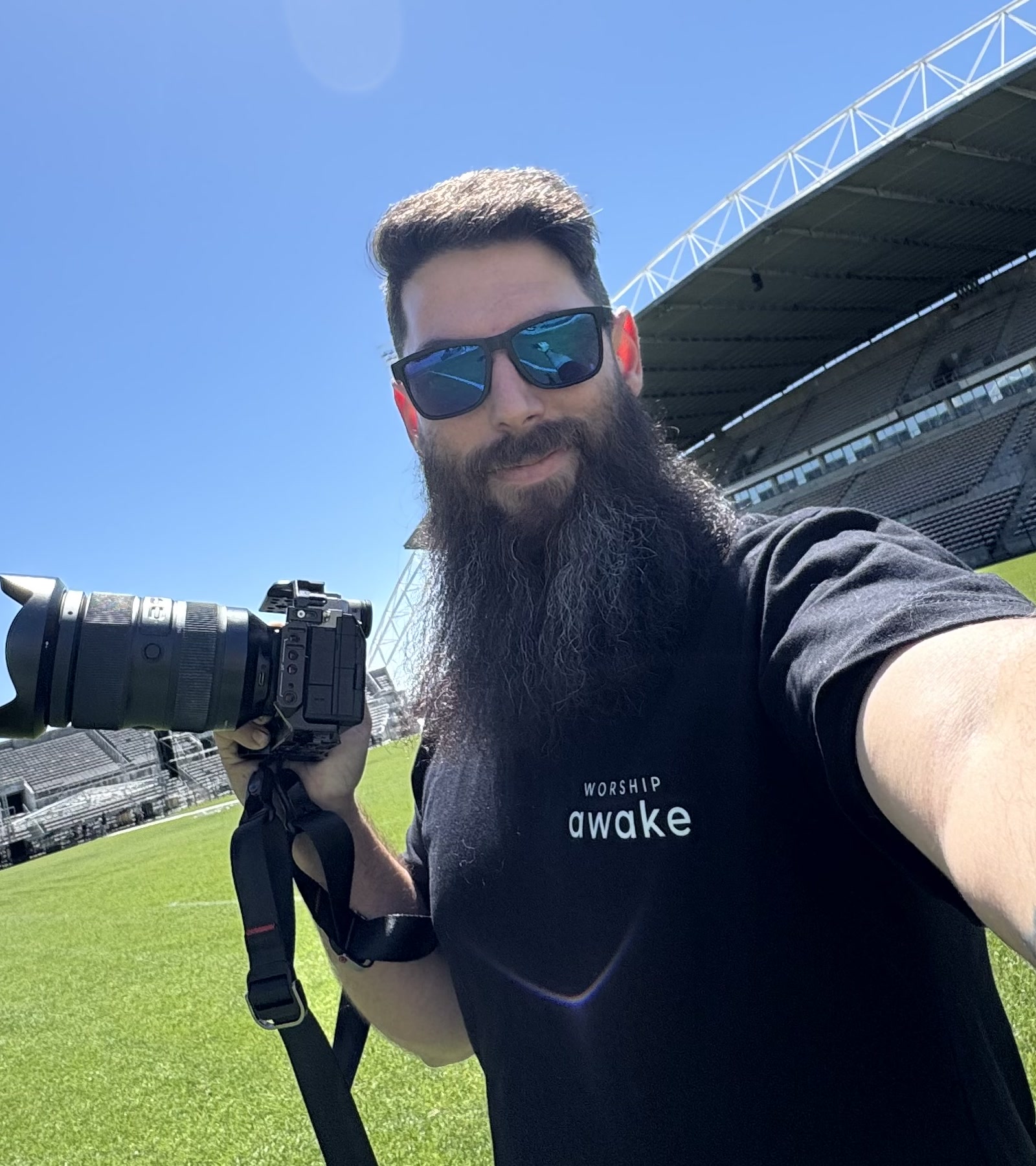
I'm a husband and father of three — two daughters and a son — from South Africa. I’ve spent much of my life serving the church through technology, production and ministry, and today I’m focused on pioneering what I believe the Digital Kingdom can become. I’m the founder of Kingdom Spaces, where we’re exploring how digital spaces can help the physical and digital expressions of the church remain connected, creating room for relationships, discipleship and shared life to continue throughout the week.
What happens after a church's livestream ends?
Arno Pretorius's answer starts with what a physical church already has after the service: conversations in the entrance hall, volunteer teams talking, prayer afterwards, families doing life together. Most churches have no digital equivalent unless they go looking for another tool to add and administer. His approach is to meet people where they already are, on their phones and in WhatsApp: the daily devotion from Sunday's message arrives automatically, someone engages with the message again, sends a prayer request, and it reaches the prayer team, who can respond. Those touch points are where a relationship can form for people in the room and people watching, but they cannot happen if they do not exist.
If churches already have good technology, what are they actually missing?
Arno says it is not a lack of technology. Churches have YouTube, WhatsApp, Facebook, email, an app and a CRM, and much of that software is brilliant, but most of it solves the operational problem rather than the relational one. The result is that the different platforms feel like different churches. His example: someone can watch a church's YouTube thirty or fifty times and consider it his church, but where is he connected, and who is discipling him? The gap is knowing who is responsible for which relationships and how they come together.
Of notes, scripture highlights, questions, reflection and prayer, which do churches underestimate most?
Notes. Arno noticed that 50 to 60 percent of the people around him in church were already taking notes, on paper or their phones, so nothing about their behaviour has to change except where they write. In Kingdom Spaces, notes taken during a recorded or streamed service are anchored to the exact moment in the message, so people can go back and reflect during the week, Bible verses can be pulled in, and the in-person listener and the online one engage in the same place.
Digitally are you referring to moderation tools and interaction history to uphold accountability?
A viewer asked this in the chat after Arno described accountability. His picture of accountability in a church is a prayer team: trusted people carrying the church's values, with enough relationship that someone can correct them without damaging it, and others brought in if a one-on-one conversation does not help. For digital accountability, he said, you need tools in place to facilitate that process and to go back and see what happened, so the team knows what needs to be done to restore it.
What should a church do first if its stream ends and nothing happens after it?
Arno's first question is what the livestream is for: missional reach, people outside the church's area, accessibility, or teaching distribution. If a church cannot answer that, he would rather it not livestream, because of the pressure it puts on volunteers, and instead upload the message later as part of a content library people can search. Jeff adds that he has said the same for years, and that even a church that chooses not to broadcast its service can still use digital to strengthen its physical relationships.
Should a small church invest in digital?
Jeff says that if he were leading a church plant or a church under a hundred people, he would double down on digital and put more energy into it than a megachurch would, because relationships are what small churches are good at: people know your name and your story. One church he works with has about 250 people in the building on a Sunday and another 150 to 200 watching online, and the work now is finding out who those people are. Digital can also route people into the building, through campaigns, an app and community that builds trust.
Why should the church own its own digital platforms?
Arno points out that most places the church gathers digitally are free platforms owned by large technology companies, so the church does not own that technology. Looking ten or twenty years ahead, he wants to build infrastructure the church can own, equivalent to a YouTube, WhatsApp or Facebook, so it is not controlled by them. Jeff agrees it is rarely discussed and adds the catch: a platform of your own only works if its engagement is attractive enough to pull people to where the community is.