Dr. Sam Hayes spent five years at Fuller researching how apostolic leaders across six continents engage the digital space, and the result is Global Digital Missiology — an academic book aimed squarely at the seminaries that have been slowest to take any of this seriously. His argument builds on Jason Morris's platforms as places and pushes it further: platforms are nations. 5.4 billion people are online, Gen Z spends seven hours a day there, and people are not visiting those spaces, they are living in them. Which puts "make disciples of all nations" on the table, since the command predates every border ever drawn.
The finding Sam did not expect was relational, not technical. Every leader in the study, from a one-person team with AI to a twenty-person team, had a digital engagement team, and every team had a digital native — usually in a parent-and-child kind of relationship with the leader. The ones who embraced that went further, faster. He tells the story of a mother worried about a son who speaks "like a bishop" on Discord, and the moment she realised he was being formed as a missionary to a people group she could never reach.
The shadow side gets its own stretch: data extraction through a Facebook group nobody thinks twice about, vulnerable people walking through the wild west to get there, and an attention economy that pays for outrage. Sam's line is that views and shares are Mammon's metric, not God's. Jeff adds the version he has been living in Miami — a year of relationship before a physical church would take off the vanity-metric glasses, and a 70-year-old man in a wheelchair whose message deserves better than being made into an influencer.
Asked what a church should not do, Sam gives three: do not go alone, build the team from the people already in your church rather than hiring out, and ask God what your calling actually is — which nation, which people group, which platform. Jeff's closing note is the one he keeps returning to: physical churches that engage people digitally through the week disciple them better than Sunday alone does, and most of them are still missing it.
Jeff Reed: All right. Hey, everybody. I think my mic is up. Should be looking good. All right. Episode 375 of the Church Digital Podcast.
Jeff Reed: Excuse me. That's the old name. It's the old name. That's the old music. Kind of got sucked in. I apologize.
Jeff Reed: Episode 375 of Becoming. the church digital excited about this this conversation in today's episode uh if you're watching live awesome we saw saw that thumbs up uh hit like hit subscribe same thing if you're you're watching on demand uh algorithms have loved us lately like that we have been getting a ton of traffic on demand And community's been watching a lot of stuff on post, obviously. You know, we do these streams during the day, and it's always, hey, who's going to come in a couple? Great, love to see you. Thanks for coming on.
Jeff Reed: But those that are engaging on demand, feel free to throw a jump into the chat. If you're not on WhatsApp and Discord, you know, what's wrong with you? Get into our communities as well and start to engage with that. I think it's thechurch.digital.com. Thechurch.digital.com can get you into this conversation. So I've got the music coming, you know, kind of lo-fi playing a little bit.
Jeff Reed: I'm going to get sappy right now at the beginning. I wasn't planning on doing this, but the lo-fi I'm playing is in the honor of Steve Reed. Steve was an active part of the Church Digital maybe for a year or so. He was our boomer and loved having Steve involved in the conversation. And I can just remember being on a stream like this with Steve and having to actually explain to him what lo-fi music was. He just did not understand what lo-fi was.
Jeff Reed: And the reason I'm bringing this up now, Steve passed away. He was having some health issues for the past six months or so. And things just progressively got worse and worse. And he passed away earlier this year. And so I miss Steve. We're not related, brother from another mother, but Steve was passionate about discipleship and saw the purpose of digital in that and loved having Steve part of the church digital.
Jeff Reed: I can just remember so many conversations that he would jump in and open offices, literally like first thing in the morning. he would come on and we would be talking about, you know, all sorts of stuff. Early in the morning, him drinking coffee, me drinking coffee first thing and rolling to it. So, you know, Steve, well, I can tell you Steve was a Christian whole through and Steve is... you know, in heaven now in a better place. And we're stuck here.
Jeff Reed: So we're not mourning Steve's loss because it's a gain for Steve. We're praying for Steve's family. He left a family behind who's dealing with a lot of questions and struggles. It's hard losing the captain. And so we discussed it. I put a post in WhatsApp to the family post on Facebook where they discussed it.
Jeff Reed: I had been texting with the wife and the daughter leading up to the situation. um transparently it was funny I I told when I heard Steve's in the hospital I'm like I'm getting in the car he's he lives four hours away from me he's like I'm driving over like he can't stop me and um he was in by the time he hit the hospital he never got out of ICU he never was in a position to get visitors and it was hard and and I don't know the family and they were kind of like yeah you're that weird online guy I don't know about you so anyway Online ministry, remote ministry is hard. That's a whole other conversation for a different day, but we're excited to kick off this new fall season, 26, and re-engage with the Church Digital. I wanted to throw two or three ideas at you all, some things that are coming up. I'm not going to get into it.
Jeff Reed: I may tease it later and actually talk about what's happening, but there is a huge opportunity for The Church Digital that has been given to us. And I don't want to get into the details of it, but I do want to ask one thing. Take a moment and continually pray for the steps of The Church Digital in the next couple months. A globally recognized organization is asking to partner with us on a situation. I'll get into the weeds of it later. I could just get into it all now, but I don't want to.
Jeff Reed: And it could be an incredible opportunity for us, or it could be a giant self-destruct. And there's some risk that's involved. There's a lot of unknown at this point. But it's an exciting season for the church digital. And I'm excited about the conversation we've got coming up. Dr. Sam Hayes is right around the corner, author of Global Digital Missiology.
Jeff Reed: I've been working out, just trying to gain the muscle mass to lift the size of this book. I'm going to share with you here in a little bit coming up right here around the corner. Put on your calendars October 7th. If you've been hanging around the Church Digital for a long time, you know that we are a community. We're a family. That's why we call FAMFAM.
Jeff Reed: We've got communities in WhatsApp and Discord that are thriving communities where we're engaging with people that are championing the idea of digital discipleship. literally globally. Like, they're open offices. I'm talking to multiple continents. A day does not go by where I'm not talking to people on two or three different land masses globally. Like, it's an incredible, so exciting experience to be a part of this, and so thankful God allows it.
Jeff Reed: But we want to hear from you. This season with the podcast, with the show, I've got to stop calling it a podcast. It's much bigger than a podcast these days. But what we're doing here with the show, we want to hear from you. And so October 7th, 2 p.m. Eastern, this stream right now, in two weeks, we're doing a town hall meeting. If you've been part of the town hall, this is where we hear from you, and we have a lot of engagement.
Jeff Reed: People come on with the stream, and we've got surveys and opportunities to talk, and we cast vision for what's coming up with the Church Digital. ahead and you know i know with my health issues earlier in 26 really hadn't done a lot of town halls and i'm so thankful for the team that was um pushing the church digital in the seasons where i just wasn't in a health position where i could do it but i'm excited to be back to be doing shows like this and to help them with that so um october 7th Two weeks from right now, 2 p.m. Eastern. Jump on that. Actually, you know what? There's another thing, too.
Jeff Reed: The church.digital slash events. Maybe the biggest pain point we have is time zones. People are always like, oh, I forgot. Especially in the U.S., time zones change because of daylight savings time, but it doesn't change globally. It's a pain. And so I built a system at the church.digital slash events that all of our streams, all of our open offices, the entire calendar of what we're doing as it's growing, but it's adapting based on your time zone.
Jeff Reed: And so, you know, Utope in Nigeria, no longer, I love you Utope, I'm mocking you a little bit because he's the worst because time zones just, it's a giant... And he'll jump on, show up like right at the end of a meeting and be like, hey, I'm here. It's like, all right, we're leaving. Bye. Because, you know, it's just time zones. So check out that account of the church.digital slash events and do that.
Jeff Reed: But hey, you know what? I've been talking a lot and I want to go ahead and bring in our guest into this conversation. I want to welcome Dr. I started to call you Steve Reed, man. That's just like in my in my heart right now. Dr. Sam Hayes, author.
Jeff Reed: Like I said, I have been working up. Global Digital Missiology. Global Digital Missiology. That's the size of the book. You know, I'm going to do this.
Jeff Reed: So I write a book on virtual reality, virtual reality churches. Thank you. Here it is, I'm pimping, this is my first book. That's compared to this. This is a massive resource on global digital missiology. And Dr. Hayes, I wanna thank you for joining this conversation.
Jeff Reed: And so thanks for being here. This is your first time on a stream, right? I don't think you've been part of this before at the Church Digital, right?
Jeff Reed: Hold on, we lost you. Oh no. I promise you, we did a mic check earlier and everything was here. I am not seeing you on the screen. And I should see, I was seeing your audio before. Do you wanna hang up and come back in?
Jeff Reed: I don't even care if you just use the mic. Yeah, do that. He was trying to use a lapel mic to get a better feed, but he's going to come back in with it. Dr. Hayes, and I'll say this when he's in the room too, but he's been an incredible resource and encouragement for me in the past year and a huge supporter of the church digital. And so here you go, Dr. Hayes. How are you doing?
Jeff Reed: Doing pretty good. Can you hear me now, Jeff? Yeah, we're all good. Sorry about the tech issues on that, but glad you're here. I was telling the crowd while you were gone, man, you have been such a supporter of the church digital and an encouragement for me at a personal level. I can even remember getting really tacky jokes texted to me when I was in the hospital or a distraction to talk about things down the road.
Jeff Reed: And so, man, thanks for your support and the comfort. really, that you've been providing, at least with me and other leaders here at The Church Digital along the way, sir. So thank you for doing that. I really appreciate it. Awesome. So tell me here a little bit about this book, Global Digital Missiology.
Jeff Reed: This is a hefty lift. What's the purpose? What's the story? Who's the audience? What are you really doing with this thing? Yeah, yeah.
Jeff Reed: No, I really appreciate it. And at first, I just want to say thanks, Jeff, to the community, the fam, for allowing me to share my story and walk with you. I mean, you guys are a trailblazer in this space, and I'm honored for all the great work that I'm able to build upon with you all on this journey. And so simply about my journey. Okay. You know, I don't know if I'm a glutton for punishment, but, you know, along my academic journey, I told the Lord if I can get a secular doctorate, I want to get one in him.
Jeff Reed: And now I'm in this space. I find myself in the halls of Fuller Theological Seminary, and I'm thinking about what do I want to do? And as I'm in the military, as I'm trying to work out what the Lord has me do in his kingdom, I find this convergence of what's going on in the battlefield, what's going on in the kingdom, what's going on in the digital space, what's going on in innovation. And it all collides in the classroom. And he begins to just put my heart in his place of study how my apostolic leaders are engaging the digital space there is something there.
Jeff Reed: And so the story is simply born out of a dissertation, five years of study, just really pressing in of what the frontline is to help practitioners and academics and scholars go further for him to just see how we can share the gospel across the world. Wow. And so the focus of this with your time at Fuller, like this is not a casual read you'd pick up at Barnes and Nobles. This is more of a, like this is a true academia textbook you're writing here, right? Yes.
Jeff Reed: what's the focus to really drive you to reach the academia market? I don't mean disrespect of this. And we'll have Dr. Lowe from Liberty on as well here in a month or so. But there's not a lot of...
Jeff Reed: I don't know what the right word is, interest? Receptivity is probably a better word. I remember I was speaking when I was in Luzon in Korea, I was speaking with the head of a major seminary up in Canada. you
Jeff Reed: And I started talking about what I was doing and dude was just glazed over. Like he was not open to this idea. Why are you investing time and resources into reaching that specific audience? Yeah, you know, one of the things that I saw with my peers is when practice outpaces theology or theories, there has to be something that informs it. And I'm a practitioner at heart, right? I'm the guy that's with boots on the ground, wants to do the right thing.
Jeff Reed: And so I find myself in between what the practitioner is doing and what the scholars are doing. So either I can go into the academia and look at the theory to explain what's going on the ground, or I can see what the digital practitioners are doing and then help build a theory for that. And so in the halls of the Ivy League schools or the Ivy Tower, there's not a great deal of sense of what is going on and what's explaining it. There's gaps. And so as I saw those gaps, my journey began looking at, is there a digital reformation? Is there something going on that we're missing?
Jeff Reed: How can we explain that? And that really started the journey to look back at my experience in the military to see. is there something there because there are great leaders that walk among you jeff that you have community with that i that i fell in love with that you're doing great and wonderful things but the world does not see it they don't feel it and they're kind of these trailblazers like paul just making it happen Totally. In one of those, I know we've had a lot of conversations with JMO, Jason Morris. Jason wrote one of the introductions in this book.
Jeff Reed: I actually was blessed. I didn't know. For the record, I was kind of surprised I did this. yes
Jeff Reed: um i was i thought i was asked to write an introduction and when i when i look at the book it's actually like one of the forwards and evidently my short introduction was like eight pages or something so like i evidently i was i was very wordy on it um god bless but um you know jamo was was one of these these inspiration he's an inspiration to me uh jason actually right now so i'm having this conversation he is he's speaking for the church digital on um um um on platforms as places. And that's the philosophy of the Church Digital, that we want to treat Facebook, Twitch, Discord like a normal missions agency would treat India, China, Brazil, and equip and mobilize people to be missionaries in those platforms as if they were places. Train people on the culture, equip them, and send them out. And so that really, I mean, I remember the first time J-Mo expressed that to me.
Jeff Reed: My head exploded. I was like, say that again. That is the language. We're going to do that. Honestly, that was maybe two years ago before Lizon and maybe three years ago at this point. thank you And so that's really been the core component of what that is.
Jeff Reed: I know within the book, you've had conversations. I remember the first time I had a conversation with you talking about some of the stuff that you were doing, Platforms as Nations. I was like, oh my gosh, I need to get you and J-Mo together and let the two of you talk at a philosophical, theological level that I am not tracking with, but able to keep up with, let me say it that way. But Platforms as Nations, is built into this book, into the philosophy of what you're talking about. I'm just curious because platforms as places, platforms as nations, it's more than just a nuance.
Jeff Reed: um You're seeing these platforms as actual nations. What is that...
Jeff Reed: What is that responsibility? If we really are looking at these platforms as nations, what's the reason why you're looking at that nuanced difference? no i really appreciate that so i kind of want to back up and lean into this so so the research you know from fuller was looking at seven global leaders across the world right the continent and seeing what they were doing and it kind of teased out a nine-step process to engaging the digital space
Jeff Reed: And after that finished, I began to stay in this space. And I ran across Jamal's platform as places. And it grabbed me. I mean, Jeff, I mean, he's a brother from another mother, right? Ha ha ha ha ha. And as he is distilling this great work that he has done, what resonated with me is a place that you visit.
Jeff Reed: And as I began to lean in and pray and say, okay, Lord, let me go back and look at the great research that I have done and look at the data again, I realized that the platform as nations to build off his great work, it symbolizes where people live. As you know, there is 5.4 billion people that are in the internet as of 2024. The Gen Z is spending seven hours a day in this space. That means there are more people gathering in digital spaces than any street in the world. And when you have that community, when you have that place, they're not visiting, they're living. And so the connotation and what is really requiring us to really look at Matthew chapter 28, verse 19 again, go ye make disciples of all nations.
Jeff Reed: Mm. People groups live there. The plant me, the groups of people, they live there. So if they're living there, we have a charge to go there and share the gospel. And that was boom, mind changing for me. Yeah, I mean, it's funny, the Pantate Etni, I'm probably mispronouncing that, but that's such a key philosophical shift.
Jeff Reed: You and I were talking yesterday. Tell me the story of the mother. who had the kid that was gaming. And you were speaking at a conference and having the conversation. thank you Yeah, yeah.
Jeff Reed: So talk a little bit about that because it's interesting kind of the mental shift that happens once you really start to look at these platforms as people groups and the people that are in that space. Go ahead and tell it. So over the last couple of days, I was in Charlotte and I am a part of an organization called ICAL, International Coalition of Apostolic Leaders. And this was a region in the U.S. and we were talking about how do we come together as a church and really influence our cities. And a part of this conversation I was sharing about global digital missiology. And we have this, you know, this Generation Xer lady who was on fire for God.
Jeff Reed: I mean, she is sold out. And then she has this youngster who's a digital native and she she shares her frustration. You know, my child, you know, he's an introvert, but, you know, he is so well known in discord. I mean, he's getting a scholarship to college. He's in e-sports. And when he's on this space and discord with the gamers, he speaks like a bishop and he confuses me like, Lord, is his soul okay?
Jeff Reed: What's going on? Bye. You know? and and her father is speaking about his grandson don't worry god's gonna use him he's on ice and after our conversation about how god is raising up these digital natives to speak into the digital nations to speak into the gamers it shifted in her mind that realizing He might not operate like me, but God is going to use him in a mighty way to speak to a generation that I can never speak to. And the light bulb went on instead of praying, hey, what is he doing with his time?
Jeff Reed: Yeah. Realizing he's been formed to be a digital missionary to a people group of the gamers that she can never reach. 100%. And it really is so beautiful to have that conversation with people where you can flip the script on them. And, oh my gosh, my son's exposed to this. is this It's the world of the devil and blah, blah, blah, blah, blah.
Jeff Reed: And all of a sudden it's like, oh my gosh, my son has an opportunity to engage in the space and to reach people for Christ using these tools. It's beautiful when you see that come about. And I know it's, you know, I don't mean to be rude, but churches in America, churches globally, they often struggle with that philosophy, with that model. Digital discipleship is a challenging thing. Yes.
Jeff Reed: And so I understand that, but the reason books like this are so important, in my opinion, is it starts to chisel away at the philosophy that it's not important. And we start to put together findings and facts and statistics and stories and surveys of people that are doing this. You researched, what, 80 surveys, seven interviews? You spent a lot of time... dig it in to create a mass like this.
Jeff Reed: What was a surprise to you in the data? What were you expecting? What'd you find? What was like the, oh my gosh, I didn't see that one coming. yes so some of the surprises for me was those who partnered with digital natives went faster right and and you know Regardless if it was a one-person team with AI or a 20-man team, each global leader among the six continents all had a digital engagement team.
Jeff Reed: Surprise one. Surprise two is each team had a digital native and those who embraced the digital natives went further faster. Hmm.
Jeff Reed: It wasn't about the tools. It wasn't about the technology. It wasn't about the technique. The simplicity, it was about that relationship between that apostolic leader and that digital engagement team member that often took on a parental relationship, a father to a son, a son to a mother. I mean, it was beautiful that it really boiled down to this bridge between that digital native and that leader and having a relationship to walk together for Christ. Yeah, it's interesting.
Jeff Reed: Flat cap's jumping on here in the background. That sounds like a person of peace. Yes.
Jeff Reed: Oh, sorry, man, I clicked off that too quick. But it sounds like a person of peace almost a little bit where you've got that native that's in the space that can help translate and guide and direct towards that. Flat, that's a beautiful call right there. Now, I'm gonna like...
Jeff Reed: That person, that person of peace, that's not like in the physical proximity, right? It's not like, you know, it's somebody completely separate, right? And so the relationship is only digital? Yes.
Jeff Reed: Yeah. So so sometimes like these digital engagement team members are co-located and there was some that were in different continents. Uh-huh.
Jeff Reed: This one lady had three continents, different team members coming together, working to extend that leader's message globally, amplified. And and these these. team members embodied apes and and for those who are out there as it's the fivefold right the apostle the prophet the teacher the evangelist and these youngsters are being released into their calling and and operating in a digital capacity that they're like wow for example when those who gather in the community you need a digital pastor Yeah.
Jeff Reed: someone to kind of walk with them, right? Who is gathering them? That's the evangelist. Who has the strategy of all the systems and all? That's the apostle. I mean, so they're embodying these things in new ways that was phenomenal.
Jeff Reed: And going back to that person of peace, it's kind of like an immersion leader, right? Whenever you go into a nation, you're looking for someone who is local, indigenous to raise up because they know the culture. But I challenge people who are in the boomers and the Xers who wants to extend, where's your digital native? If these are nations, who is local and a digital native leader to raise up in TikTok to express what God has in your heart? That's so good. You know, it was interesting.
Jeff Reed: I was having a conversation before this call with Paul, who's a microchurch leader. He works with Tampa Underground here in the States. And, you know, he made the comment, you want to go fast, go alone. You want to go long, go with a team. And it's, you know, involving more people. um um You may already made a reference to APEST in that, which obviously plays a, or at least with the Church Digital, we promote as a big part of finding partners and rounding out not only a digital skill set, but a spiritual skill set to make sure that things are complemented through that.
Jeff Reed: Like, you know, from a church planting world, you really are speaking here in this, you're speaking the language of a church. But obviously this Pantate Etne, I hope I'm pronouncing that right, Pantate Etne, it's not... And some people don't buy into that digitally. When you have the conversation with the pastor that's not a supporter, how does that go? No.
Jeff Reed: How do you convince someone? What's your argument to help them understand maybe the cultural implications within these platforms? Yeah, so first, if we go back to this allegory, right, platform is nations, right? So you have the governance. So when you sign up for an account, that's like gaining a passport to that place. And so the implementation of that is whoever is the one who's designed that platform, they have an algorithm, right?
Jeff Reed: Are you going to look for virality? And right now in the virality, they're looking at these... contested things that goes faster are you going to speak biblical truth are are you going to look at the economic side of it right so the economy says right now we're an intention economy to those who act crazy gets more likes gets more advertising dollars are you going to subscribe to that or are you going to do what honors what the king of kings says to do and so there's a choices that content creators and digital missionaries And as they navigate this space, because you have to understand what works on Facebook doesn't work on TikTok. What works on LinkedIn doesn't work on X. And you have to understand that each platform has this unique way of moving as a nation so you can be effective for the kingdom in that space.
Jeff Reed: And so if leaders don't subscribe, to that they're a nation they're missing the mark to share the gospel and the command in matthew 28 and 19. so right now there's 195 recognized nations in the world that was that command was given before any border was drawn that we right that command go into all the nations so it's talking about people groups Yeah.
Jeff Reed: people groups so if there's a group that is forming of gamers a group of people in discord a group you can reach them and we have a command to do so yes I mean, reach them even in the digital nations. That's such a challenge. I love that. I love that you're pushing these buttons. Now, the reality is that digital does have its downside.
Jeff Reed: It was funny. Yeah, yeah. I was talking with Paul today. Hey, you know what? The successful digital ministries that I'm looking at today, I mean, arguably, you could say they're influencer based.
Jeff Reed: You know, people actually call me an influencer, which I kind of laugh at because this is not the face of an influencer. But I do admit I play that role. I do the streams. I run the social media. I have the conversations. I engage in the community.
Jeff Reed: You know, Leighton was on here. I think he's still on here as well. Leighton Flatcap does that as well with that. And so there is there is like a shadow side. to this conversation. um You mentioned attention economy.
Jeff Reed: You mentioned algorithmic division, which can be a strength and it can be a weakness. Data extraction, vulnerable populations. If a platform, if we're using this, what's the line where we utilize the strengths of this without being complicit to the shadow side of things? How do you draw that line? Yeah. So, for example, some of us are not even aware there is data extraction.
Jeff Reed: And I'll have a simplistic example. Yeah. So we don't want to do any harm. Can you imagine you create a Facebook group? Someone who's not on Facebook gets an account. Now they're going through the land of Facebook to your private group.
Jeff Reed: That person and you might not recognize as they gain entrance into your group. Now all the bait click is getting data. on who they are, where they live, their IP address. And so for vulnerable populations, youth or the elderly or those who have challenges are now going through the Wild Wild West to the group where you've created. Yeah. So how are you protecting them, right?
Jeff Reed: And then as you do your message, if we are counting views and shares as the metric, we're doing it wrong. That is Mammoth's way or the world's way of viewing what is valuable. God values discipleship. God values engagement of time. So when you're giving your time, as you build your funnel and this community, and it has different metrics of those who serve the King and discipleship, We have to look at different metrics and not bend to what the algorithm says is important.
Jeff Reed: We have to bend to what the king of kings says is important. And sometimes that's a challenge for people to see that line and to build it as a safeguard. yeah yeah and that's that's unfortunately that's just pre-programmed by culture um a lot of a lot of what we're we're doing you know you hear me say the phrase flip the script because we're we're doing things opposite i can actually remember during covid i had a conversation with a master's student Yeah, yeah, yeah.
Jeff Reed: um um at Texas Christian University. They didn't realize I'm a TCU alum, and somehow they got connected. But this master's student was doing a research on digital missions, like 2020, 2021. And we started talking, and I was sharing this reverse philosophy. It's not influencers, it's engagement.
Jeff Reed: It's not try to collect as many as possible, but having that one-on-one conversation. And it's funny, this master student, head is blown. And I still, to this day, I still get occasional emails. um um
Jeff Reed: She's no longer with TCU. She, you know, got her degree and has moved on, but she's still asking questions, trying to navigate through this. And, you know, I know even like churches that I serve with here in Miami, the pastors are not, they're not... They're not wired to be the influencer. I don't want to paint that picture. But they're wired to be skeptical of the influencer.
Jeff Reed: And so, so much of when I come with these ideas, they put on these lenses of... um um he's only interested in views. He's only interested in vanity metrics. And just transparently, it's taken a year worth of relationship to get them to take those glasses off and start to look at it from my perspective. Like I've said the entire time, I'm not interested in turning this 70-year-old guy in a wheelchair into being an influencer.
Jeff Reed: That's a disrespect to him and what his message is. But there's stuff that this guy can do that we're not using effectively to get people into the building. um
Jeff Reed: And if that's your metric, then let's do that in a physical space. Digital, man, there's so much opportunity to do things, but you've got to release that vanity metric. Give me a success story. Maybe somebody that has done that, has released the vanity metric. Was there an example of someone in your surveys and interviews that maybe was going one way, pivoted, and saw God move as a result of that? yeah so there was this uh lady in um africa she had a 20 member team and that this idea came from her digital teammates that she championed it was about those who were hurting And they had a lack of voice where she created a private group where they could heal, where she could speak into.
Jeff Reed: And it wasn't about the numbers of what was being seen. It was about what God was doing in them for a later season in their life. Mm. And these individuals weren't churchy. They were actually in the school of government. They had, in Christian language, they use a word like marketplace.
Jeff Reed: So they're in the marketplace. They were struggling students. And they're trying to find a voice, trying to connect the dots between what God has for them and their career in government. And as she was speaking to them and helping them heal, they became in later time, in a later season, better able to navigate the land that they were working in. And so that was beautiful because her team members said, hey, people are hurting here.
Jeff Reed: Can we hit pause and create a group for them? yeah yeah And it wasn't about look at me. It was about doing what the king says that this sheep is heard and go after it.
Jeff Reed: How do you, it's interesting, you find your sheep, go after it. And this idea of nations, digital nations, digital people groups, disconnected people groups, all of a sudden this is really just opening up. yeah yeah
Jeff Reed: How do you find, how do you actually identify? a digital people group? How do you go after it? This is a pretty lofty claim. It's a challenging idea. So what do you recommend in the idea of finding and engaging in these disconnected digital people groups?
Jeff Reed: So I have two examples. So one is a blueprint and one is an example. So I have a peer. He was in Fuller with me. He comes from China. He was really into helping his people in restricted China find their way with God.
Jeff Reed: As he left China and came to the US, he still had a burden for that people group. And today I joke and I call him the digital Peter. So he's created this space where he's able to connect the diasporic Chinese population in several countries where he has... culturally Chinese music worship. And he creates a space regardless if it's restricted or not.
Jeff Reed: They gather digitally across the globe so they can worship the king. How cool is that, right? Hmm. So he's finding his people, his tribe amongst scattered into a safe place that he's able to create and they can connect back to their Chinese culture. Hmm. Beautiful, right?
Jeff Reed: The blueprint. So if you are saying, hey, how do I find my tribe? How do I find my people? I would ask you to say, what is your gifting and talents? Who resonates with your voice? Because that natural alignment, you can find it.
Jeff Reed: So for example, I'm a strategist, right? If it's in business, if it's in military, if it's in church. And so my gifting is to help people who are strategists with tools. And as I began to speak, that's what I attract. So if I can create a place for them to gain tools so they can run for God better, then that's how I'm attracting my tribe. You have a gift that we need.
Jeff Reed: I often tell people that you were born in this season for your gift. Your gift is not for you. Your gift will make room for you. But it's for others to eat. It's for others to be nurtured. The fruit is never for the tree.
Jeff Reed: It's for those who are coming by. So please grow your fruit. Find your tribe because we need you. It's interesting. I mentioned Steve earlier off cuff. Actually, this conversation, Steve comes to mind again.
Jeff Reed: Transparently, I'm curious your take on this because I handled it one way. I'll admit, maybe it was wrong. I think it paid off though, but I'm curious your response. um um Steve is... You know, just forgive me.
Jeff Reed: Steve, I love you. He knows this. And I've had this conversation with him when he was alive in the room. But he was a boomer. He was passionate about Christ. He retired, kind of post-guy.
Jeff Reed: Lived west coast of Florida, simple life. You know, driven business success, not much ministry experience. But really wanted to do much in his closing years for Christ. And somehow he got the idea of being a digital missionary and connected with me through the website or something, but had a meeting with me. And he also was having a conversation with, let's just say a globally recognized missions organization. Thank you.
Jeff Reed: Like I don't need to out the specific organization for the story, but he was interested in using his waning years uh for uh ministry digitally and he was passionate about globally and so steve comes to me this is the interesting part of the story steve comes in this meeting and and he's like hey you know what jeff i'm really interested in in being a a missionary um i i want to reach the indian people Okay. I remember this first conversation, this was maybe two years ago. He was very passionate about India. And I was like, you know, Steve, what do you know about India?
Jeff Reed: And there's 1,800 dialects. Do you know anything with the language? No. Do you watch TV, engage in the culture? Do you know anybody that's Indian? No.
Jeff Reed: Have you eaten at an Indian restaurant? Do you know how to drink the chai? You can't say chai tea because that's TT.
Jeff Reed: It's a Spider-Man joke, but no, like, you know, do you have any culture engagement with this? um um And the answer was, was no, no, no. He just, you know, had this idea of, of India in his, in his head. No, at that moment, and this is where I like, I would love feedback. I actually directed him away from India as the people group.
Jeff Reed: I felt he had a calling to do digital missions, but reading the situation, I didn't think, forgive me for like stereotyping in this, but an older boomer white man digitally who doesn't understand Indian culture is not gonna do much in India to be effective. yes okay But what happened was he actually had a 250-person Facebook group of people that were mixed of Christians and un-Christians that was built as a support group when he was coming off cancer. And I was like, well, Steve, forget about India. That's your mission field there. Here are people that this is your people group, and they're already loyal to you because they supported you in your mental time, in your physical time of need.
Jeff Reed: So I had a guy that was interested in a physical people group with India, and I directed him another way. I just would love your take. Yeah. Should I have encouraged him for India? Should I have directed him this other direction, like I said, to something that's more relatable to where he was? How far do we push this idea of people group?
Jeff Reed: How would you have advised Steve in that situation? Yeah, so I think I would lean similar to you. And it's really about sometimes, you know, I'm gonna put on my, you know, my minister hat on, and sometimes God will speak to us in things that we understand, right? And so the burden for India was, I have to do something for people I don't know. Right. And now he's locked in into this culture.
Jeff Reed: He has the faith to walk it out. But the Indian people represented something else. Mm hmm. And you are able to guide him to that something else. And so the Indian people was the beginning of the journey for where he was able to minister to the cancer survivors or the support group that he was able to do. And oftentimes when we don't have the language or the understanding, the dreams that we get are the catalyst for this journey.
Jeff Reed: And we need someone to kind of help us figure out the interpretation of that. You know, often reminded of Paul to Saul, right? You have Nicodemus, you have, you know, so you have these individuals who help us through our blinding moment, right? And we need those guiders. And he was still able to fulfill that requirement before he was transitioned home. And that's beautiful.
Jeff Reed: Yeah. You know, one of the things that really kind of, helps me think about this people group and this platform as nations is as you get into the process, which we'll talk about later, you get to step into God's character. How many of us have ever thought about God as outside of time?
Jeff Reed: We get to design asynchronous communities. timeless communities where someone in China has a prayer request. And when you wake up in Africa, you can pray into it. When you wake up in the US, you can pray into it. And now you get to step into God's character and design timeless communities where people can come together and with this evergreen content, this evergreen message, this specific request, and we can walk in formation together. Yeah.
Jeff Reed: That's beautiful. Yeah, I mean, the apostolic of me is jumping up and down. Heck yeah, why not? It's so funny after, you know, 25 years, honestly, of fighting this battle. Yes. That's not an exaggeration.
Jeff Reed: I've kind of gotten to the place where I throw up my hands, and it's like, hey, I... Physical church, if you don't get it, you know, hey, nice. Just keep doing what you're doing. I'm literally, like, I'm glad people like you are doing things like this because I don't have the battle in me anymore. Like, I'm tired. um okay Honestly, I'm just tired of fighting.
Jeff Reed: um in the in the conversation i'd rather go with the goers and and work through it um but and that's one of the things actually i i love um about the book i respect about the book is that you know you spent a chapter 15 on you know the idea of stewarding digital within the physical church Chapter 16, you really address the idea and went digital first, digital only, what that asynchronous community digital church would look like, completely separate from physical boundaries and limitations. You know, it's hard for, you know, especially in America, to view that $20 million church as a... physical limitation but but the reality is that building that structure is a lid compared to what you can do digitally um what do you think is like i'm just curious uh in in today's society i mean let's let's box it down to american you can address global if you want um is it is it harder to do a physical with the digital is it harder to be a digital only like what what are some of the pros and cons and tensions you're seeing in maybe both models um um
Jeff Reed: Yeah, so I think it's harder to do physical than digital. Interesting. And so I kind of want to give a backdrop and this backdrop help us to think about three horizons as I walk through the physical and the digital. So you have horizon one where we are today. And that is if we don't do anything with our physical churches, people are not going to come to it. And so we have a bell curve that is going down.
Jeff Reed: And so we are those who are going to the physical churches. We got a warning with COVID that forced us in the digital space. Now that COVID is over, we're going back to the physical church and we're realizing we're not at the same capacity there. So some people didn't come back. So we have to do something different. Yeah.
Jeff Reed: the second space is where we experiment right horizon two we need to take those people in the physical space experiment what is going on in this space so we can build it out for horizon three horizon three is that digital space so for an example The answer is hybrid. You have to have a component, physical and digital. So all of those who are in the physical space, how are you taking your content on Sunday morning? that you've labored all week to produce? How are you having a content pyramid where you're extracting reels and you're extracting messages and you're extracting quotes and you're dripping it throughout the week?
Jeff Reed: How are you creating an extension for those who are not? located with you geographically that resonate with your message so they can bring together. You had this with COVID when you had funerals, people found a way to connect, or marriages when everyone couldn't come together because of social distancing. So there was models that were forced upon us. But in this extension space, how do we deal with the supplements, the Lord's Supper? marrying and bearing.
Jeff Reed: How do you deal with all that stuff? Each denomination has to figure out its own. Now you have the digital space. They get to play. They get to put on the creative hat. I mean, I get so excited because in this space now, have you ever considered the inverted church model?
Jeff Reed: Let's say I'm a pastor in North Carolina. I don't have a physical church. And I say, I want to geofence.
Jeff Reed: three cities. I wanna geofence Charlotte, Fayetteville, and Greensburg. I'm going to send my message out into social media. Only those cities can get it. And then I can look at the IP addresses where they land, and there is a concentrated effort from the IP address to a physical location, wherever the largest gathering is, that's where I build my church. Hmm.
Jeff Reed: Hmm. now i know where in a 50 mile radius who resonates with my message but you can take on any form um the other thing i would like to say as a backdrop to this is the four webs because this will help people concretely see why i say the digital is better or easier You have simply a website. It's static. It's just hanging out there. One-way communication.
Jeff Reed: Web two is you have social media where we are. Two-way, comments, engagements. For all those Christians, in 2024, we have lost...
Jeff Reed: uh web two to pornography which was the number fourth highest website and the number fifth highest website out there so they're spinning their energy somewhere that is a wake-up call we need to get out there and be a part of our game Web three, decentralization, blockchain token. We need to get into that space and formulate the rules for everyone to follow. Web four is metaverse. How many of us talk about experimentation? How many of us thought about what would an avatar church look like?
Jeff Reed: How would we lay hands on each other? Would you fall out? Our children, those digital natives, they will leave those type of churches.
Jeff Reed: The entrance cost is low, a website, a platform, whatever. yeah yeah yeah And now they are launched to this digital nation gathering God's people. so it just takes energy imagination and the will and that's why i side with digital first churches but you need both to survive you need that embodied presence Yeah, you do. It's interesting.
Jeff Reed: The last thing I would ever advocate for, and I'm a huge fan of Avatar-based church. Honestly, I can say this. 30 years ago, as a freshman, sophomore in college, I was studying up on and learning about the Avatar and about virtual reality, even at that point, trying to navigate through what the church would look like. And so some of those early experiments, even with Second Life Church, with Life Church and others, I was very active. And But what's interesting is that, man, I forget.
Jeff Reed: I was just so good with one, two, three, four. all right Man, I totally forget where I was going. You do need both. That's what we were talking about. You need both.
Jeff Reed: The last thing that I would ever say is that every church needs a virtual reality church. That's not within the culture of it. every church does not need a multilingual church. Every church does not need a classic service for boomers in that generation. But there need to be people that serve that boomer generation. is is
Jeff Reed: There need to be people that serve a multilingual, bilingual culture. There need to be churches that serve in those people groups. And the reality is, is that, I mean, I can give you names. of people that are serving in virtual reality and avatar churches that would never serve, that would never connect within a physical church. And so recognizing it as a people group, as a platform, as a nation, as an entity, all of a sudden now there's an opportunity to step into the space. um um And avatar churches...
Jeff Reed: I'm going to be very crass right now. I apologize, sir. Avatar churches, to my knowledge, have never criticized or ridiculed the physical church for what they're doing. Physical churches, I can give you testimonies directly from pastors of avatar churches that are constantly criticized, that are constantly persecuted by physical church Christians, by normal Christians that are uncomfortable with the idea of churches existing in virtual reality and criticizing. Thank you.
Jeff Reed: the pastors and leaderships of churches in that space. Like it is a, it is a freaking crime. Some of the persecution that, that churches in, in these experiments, it's the reason I exist as the church digital, because I saw the persecution that was happening within innovators and digital wide, because we're trying to do something different. Maybe it's funny, and this is going back 20 years for me. I can remember a day that probably one of the first persecution criticisms, mockings that I faced when I was in my 20s with some of these ideas, they called me Reverend Photoshop. me um
Jeff Reed: pastor of Photoshop because I was creating stuff digitally. And it was, hey, how many people rate? It was for raising the hands. It was like, how many people click that button? How many lives did you change by clicking buttons? And it's like part of me just...
Jeff Reed: It's fine. Blow it off. But there are people within these environments that are really getting persecuted hard that are looking for that. Yeah. We're going to be talking about the idea of listening tours and really trying to re-engage with the missionaries, the pastors and churches in that space because they're doing so much good. This is a sidebar.
Jeff Reed: I'm sorry, sir. But they're doing so much good for the kingdom. And it's hard right now with that front line that's doing things against the church culture that's so good about supporting and propagating itself, but really isn't good about change. um um And so it's hard being the change agent for the church because the church is, by design, not wanting to change.
Jeff Reed: Hey, talk to me a little bit. I mean, I'm talking backstories and stuff like that. You're 20 years, 25 years in the Army, special ops. You got a PhD centered around this book. What have you learned? What did the Army teach you about this?
Jeff Reed: How does your history tie into what you're doing now? Go deep here and tell me a little bit about your story and experiences. Yeah, I appreciate it. You know, one of the things that I really learned about this convergence is you have to understand that you are always trained for the past environment. And when you look at soldiers and their current battle space and their challenges, They're trained for one war, and they're facing a new war, and they have to adapt, just like with the Christian leaders.
Jeff Reed: Mm. They were trained in seminary for a physical embodied world, and now it's changed, and they have to adapt. And those who don't adapt struggle in their current reality. And so with that training mismatch, the biggest thing that you can do and I've learned is commander's intent and giving people the embodiment to adapt. And what do I mean by commander's intent? Let them feel your heart.
Jeff Reed: Let them feel your values and unleash them to take it into new forms. So when you look at Paul, Paul used the Roman roads. He didn't invent them. Mm hmm. The Roman roads were for what? Economy, extraction, but he used it for spreading of the gospel.
Jeff Reed: If you look at Martin Luther, he wasn't a technologist, right? He used the printing press to change the world upside down with his 95 thesis. right and so we have the same thing we can do ancient ways in new contexts with ai and the internet we can spread the gospel in ways that they have never considered And so giving them your heart and allowing them to understand the king's heart and trusting them that they can help translate it without losing its message is key. You see that in Hudson Taylor. Hudson Taylor in the 1800s, what did he do?
Jeff Reed: He was in the medical field. He left the medical field and went to China. He, instead of wearing Western wardrobe, he put on Chinese garb, cut his hair. He learned Chinese, translated the New Testament to Chinese, celebrated today, deployed single women, which was unheard of, unmarried women, into the house church. China is forever indebted for his work. Mm.
Jeff Reed: we have a legacy that is yet to be written in the digital space because our king of kings and lord of lords is coming back and he's going to hold us accountable did you go into all the nations including the digital ones Yeah, it's interesting as a leadership. It's one of the things we're going to roll out. I'm saying something here. I'm not supposed to officially say it, but I'm going to go ahead and say it. We're going to start doing some Bible studies and devotionals.
Jeff Reed: We're really going to lean strong in modeling some digital discipleship within the organization. Yeah, 100%. And even providing it globally within the network. Because it's really interesting to me. We were talking about it as leadership today, where the idea of what Paul, you were talking about Paul, what Paul's doing. You're telling me if Paul had a Wi-Fi...
Jeff Reed: that he wouldn't be doing what we're doing right now? Like, I mean, dude was writing letters, sending it with people. um He was remote ministry 101. There's nothing new under the sun. What we're doing is the model that he set up.
Jeff Reed: And so, like, really, if we look at... And so I sat down and started looking at Scripture. Corinthians, 1 and 2 Peter, it's like, oh my gosh, so much of what this Scripture is It doesn't discourage us. It should encourage us because we need to look at it through the lens of what we're doing digitally. Wow. And so, like, we're going to dive into the Scripture.
Jeff Reed: I think we're calling it scattered. Maybe I'm not supposed to say the name. We're still trying to brand it. But we're going to be doing a series of Bible studies to wrap up 26 and into 27, really centered around this idea that what we're doing is not foreign. What we're doing is not obscure. It's not random.
Jeff Reed: It's encouraged by the scripture. We're just looking at it through a different paradigm that's not limited to what it has been. thank you
Jeff Reed: And so, you know... God be the glory, and hopefully we can encourage some people along the way. I know this conversation right here, I've been, I mean, I've just, I love you as a person. I love, you know, the book. I love your energy. I love how much you care for the organization, for the network, for the people.
Jeff Reed: Like, you've been such an encouragement through the process. I'd love to maybe, just as we're wrapping up, maybe one or two more questions. um um What would you tell, like, there's got to be, I'm curious, I ask this sometimes, like, there's got to be a line somewhere, right? You know, it's like, what would you do? What would you not do?
Jeff Reed: Like, me personally, the idea of virtual reality baptisms, like Duncan and Avatar, you know, I know, okay, are we saying the water is really holy when it gets wet? Is that really a thing? I'm actually, I work for one of the churches that I do now. They actually, it's a Presbyterian church, and I saw a baptism a couple weeks ago, and they sprinkled and dunked in the same baptism service. okay is
Jeff Reed: Like, they did both different. I was like, can you do, but they did that. And so, like, you know, even my paradigms get stretched. And so, I'm curious, what would a digital, like, what should a church not do digitally do you have a line is it is it flexible like how would you answer that question interesting yep yeah no that's a great question so the first thing is i won't go it alone do not go alone you're setting yourself up for burnout you're setting yourself up for a lack of accountability and you're setting yourself up for um you're good to be evil spoken of so what i would do is form a team From the research, no one, big or small, hired anyone.
Jeff Reed: No one outsourced anyone. They picked all their digital engagement team members from their church. Wow. So you have those individuals among you. Raise them up, form together. Jesus picked his disciples.
Jeff Reed: You can pick your digital engagement team and walk together. The next thing is consider how you develop your community. We talked about data extraction. We talked about vulnerable populations. Put some care into it.
Jeff Reed: The last thing I would say is really ask God what your calling is, going back to Steve. is you're calling a nation is you're calling the people group is it just one platform multiple platforms you know are you the digital peter like my my friend who was talking to the diaspora chinese you have to know what god has called you to so you can walk in the north faithfully Yeah.
Jeff Reed: Yeah, amen to that. The don't go alone doesn't surprise me, but I don't disagree. Anyway, what did I say earlier? Go alone, go quick, be agile, go long, go with someone. yeah you
Jeff Reed: I think that's actually like an African proverb or something like that. But it's very true in digital space. I can tell you so many stories of crashes and burns of people that went with it alone. And just one story just jumps out in my head where it was a husband and wife duo and it was COVID season and they wanted to do it alone. And I suggested like having a team and to distribute responsibilities and things like that. And they were like, why?
Jeff Reed: and i started rattling off reasons and a pest and and you know strengthen and team approaches and all that and they were like oh we don't we don't need that and that that thing lasted like three months um and i'm not i'm not saying the team wasn't the reason but um there's there's an opera there's an opportunity to have people with you Thank you. um i've never you know at a personal level i've never wanted the church digital to be jeffrey.com because i wanted that team i wanted to you know engage with people smarter than me i wanted to you know have people to challenge my ideas and make it better and hold me accountable um um
Jeff Reed: uh for that whether that's um you know the the the senior leadership the global volunteer team the the board of directors like structure yourselves with with people that that can hold you accountable um you know even during the last two years have been hell man And to have people with me, even in those hard times, has just been so vital and so good. And I very much count this man as one of those people. So, Dr. Sam, thank you so much for being on here. I've got global digital missiology here in my hand. Amazon.com, what's the best way to pick this bad boy up?
Jeff Reed: Yeah, you can get it at amazon.com. You can go to samuelhays.org and you can also get it from there as well. Awesome. So check that out as we're landing the plane here. Dr. Sam, any final thoughts? Any closing thoughts?
Jeff Reed: yeah so i just want to say thank you um this is an opportunity that you have no excuse uh all you need is a cell phone hit click record and allow the holy spirit to guide you Yeah. You're going to make mistakes and that's okay. That's why the church digital exists, so they can walk with you.
Jeff Reed: I am super excited what God would do with you in the digital space and just be faithful. Amen. Hey, listen, it's a hefty book. There's a lot in there, but check it out on Amazon. And Dr. Hayes, you are, would you say samhayes.org? Samuel Hayes or Sam Hayes?
Jeff Reed: Yeah, samuelhays.org. Samuel, S-A-M-U-E-L, Hayes.org. I'll put some of the links in the show notes and link to Amazon as well after the fact. And so, Dr. Sam, thank you for landing the plane. Next week, for being with us today, next week, we've got Arno. Oh my gosh, I've known Arno for like almost a decade.
Jeff Reed: And Arno is in South Africa. I've never met him physically. And his last name, I'm gonna try to say it, but you're gonna butcher it. It's Arno Pretorius or something like that. He's built this incredible software platform to help churches extend engagement beyond Sunday. Thank you so much.
Jeff Reed: Thank you. And so really excited to bring him on to talk about some of the things that he's doing. The software is...
Jeff Reed: Oh my gosh, I'm blanking on it right now, the name of it. But check out the church.digital slash events. We've already got it in there set up coming up. Something spaces, worship spaces, discipleship spaces. Oh my gosh, this is bad. This is bad stream right now.
Jeff Reed: um I should have this information. I'm actually going to look it up because I feel so awkward that I'm having this conversation about Arno and I wasn't able to pull it quickly. Give me one second.
Jeff Reed: uh bad television plan in advance and i failed tuesday wednesday here we go um Kingdom Online. Yeah, let's do that. I'm going to say Kingdom Online. um um Go check it out in advance.
Jeff Reed: Kingdom, K-I-N-G-D-O-M dot online. We'll have Arno on next week to talk about his platform for engagement and how he's encouraging churches to move beyond the live stream, to engage in a digital community, to draw people deeper into Christ. You know, one of the things we kind of blew off in this, just as the segues were wrapping up, Digital churches have an incredible opportunity to break the rules and stretch the limitations of what can be with the gospel. I love that.
Jeff Reed: Physical churches have an incredible opportunity to strengthen the physical attender by engaging in digital. To me, that's the thing that I don't think physical churches understand. um um There's actually reports, we've talked about it before, Crossroads in Cincinnati, where they measured that a physical-only attender versus a physical and digital attender. The physical and digital attender showed a higher level of discipleship. by being engaged physically on Sunday and digitally Monday through Saturday.
Jeff Reed: And so the opportunity to disciple people, to engage in people, to get them in community, to establish trust and build relationships that extend into the physical realm is very possible. And that's almost going to be a drum that we're going to be beating as well because physical churches are just missing it right now. um
Jeff Reed: And they need to understand that to really be effective, I think, in the days and weeks and months to come. Completely other conversation. Dr. Sam, thank you for hanging out with us today. For Dr. Sam, this is Jeff at The Church Digital. Appreciate the time. Enjoy it.
Jeff Reed: Jump into one of the communities. Let us know what you think. And like and subscribe. All right. Thanks, everybody. Have a good one.
Jeff Reed: And this is the part of the show where I've got to find the stop button because I can never find the stop button when I need it. All right. Here it is. All right. Bye, everybody.
Jeff Reed: Alright, we should be free.
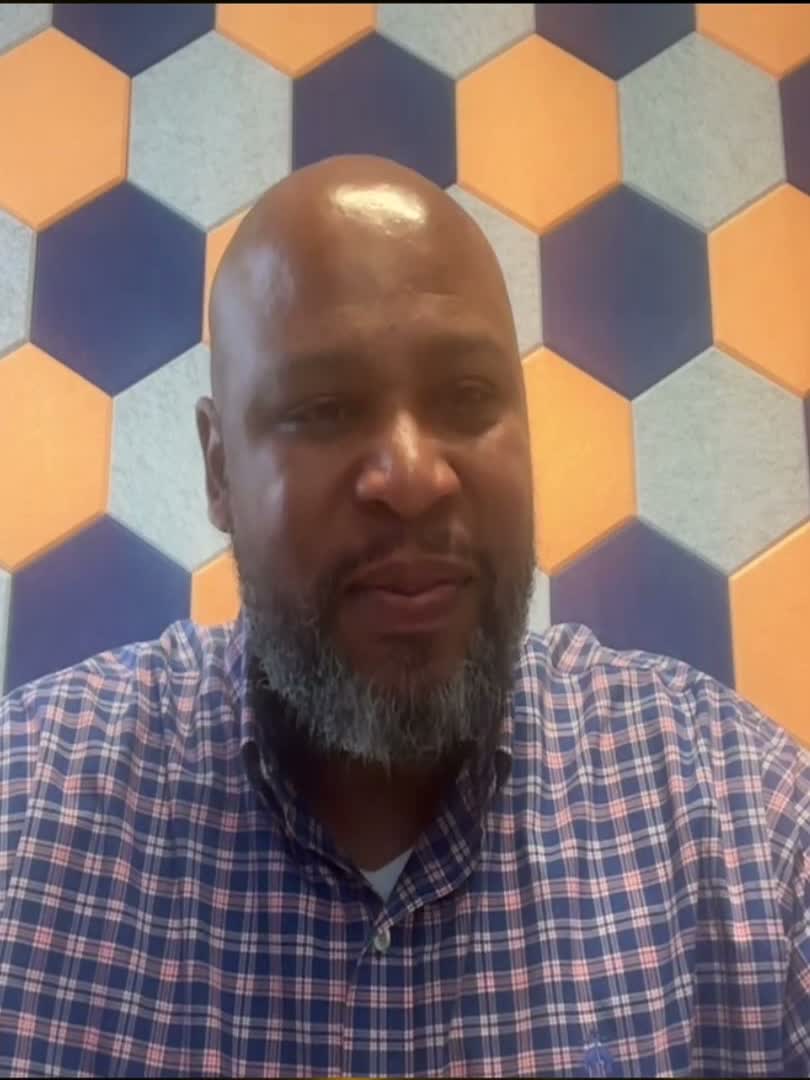
I'm a retired Army Lieutenant Colonel who spent 25 years in Special Operations, enlisting as a private and retiring as an O-5. Today I serve as Co-International Director of the International Coalition of Apostolic Leaders, lead His Glory International Ministries, and teach management and leadership.
- Fayetteville State University — adjunct assistant professor of management
- Liberty University — doctoral chair, school of business
What does it mean to treat a platform as a nation instead of a place?
Dr. Sam Hayes builds on Jason Morris's "platforms as places" and pushes it further: a place is somewhere you visit, a nation is where people live. With 5.4 billion people online and Gen Z spending about seven hours a day in digital space, more people gather there than on any street in the world — and they are not visiting, they are living. That reads Matthew 28:19, "make disciples of all nations," as a command about people groups, since it was given before any border was drawn.
What did the research actually find about leaders who do digital ministry well?
Sam studied apostolic leaders across six continents for five years. Every leader, whether a one-person team using AI or a twenty-person team, had a digital engagement team — and every team had a digital native. The ones who embraced that person went further, faster. The finding wasn't about tools, technology or technique; it was the relationship between the leader and the digital native, which often looked like a parent and a child.
Where does a leader find their digital engagement team?
From the people already in the church. In the research, nobody — large or small — hired or outsourced a single team member. Sam's advice is to raise them up the way Jesus picked his disciples: look for the digital native who already knows the culture of the platform, the way a missionary looks for a person of peace who is local and indigenous to the place.
Isn't digital ministry just chasing views and vanity metrics?
Both men say the opposite. Sam: if we are counting views and shares as the metric, we're doing it wrong — that is the world's way of valuing things, while God values discipleship and the giving of time. Jeff adds the practical version from a church he serves in Miami: he has no interest in turning a 70-year-old man in a wheelchair into an influencer, because that disrespects the man and his message. The goal is engagement and relationship, not an audience.
What's the risk in digital ministry that churches don't see?
Data extraction and the people it exposes. Sam's example is a private Facebook group: someone who isn't on Facebook has to create an account and walk through the whole platform to reach you, and along the way their identity, location and IP are harvested. For youth, the elderly and other vulnerable people, that is a real cost of the door you asked them to walk through, and protecting them is part of designing the community.
What should a church not do digitally?
Sam gives three. Don't go alone — that is burnout, no accountability, and the fastest way to be spoken badly of. Build the community with care, knowing what data extraction and vulnerable populations mean for the people you invite. And ask God what your calling actually is: which nation, which people group, which platform, so you can walk in it faithfully.
How do you start if you have nothing?
Sam's closing word: you have no excuse — all you need is a cell phone. Hit record and let the Holy Spirit guide you. You're going to make mistakes, and that's okay; that's why theChurch.digital exists, so someone walks with you.